Ausangate Astrophotography Trek in Peru
Home / Ausangate Landscape & Stargazing Trek 6 Day Photography Trek
6-Day High-Altitude Landscape & Milky Way Photography Expedition.
landscape astrohotography workshop
High-Altitude Landscape & Astrophotography Expedition in the Andes
Ausangate Astrophotography Trek in Peru
6-Day High-Altitude Landscape & Milky Way Photography Expedition
Journey deep into the Cordillera Vilcanota on a photography-focused expedition through the spectacular landscapes of Ausangate and Rainbow Mountain.
Designed for photographers who want more than a conventional trek, this 6-day experience combines high-altitude landscape photography, Milky Way photography, nightscapes, star trails, sunrise and sunset sessions, and authentic Andean landscapes.
Far from the bright lights of major cities, the remote Ausangate region offers exceptional opportunities to photograph the night sky when weather, moon phase and atmospheric conditions are favorable.
During the expedition, you will photograph snow-capped mountains, glacial lakes, colorful valleys, alpine landscapes and traditional Andean scenery while receiving professional guidance throughout the journey.
Photograph the Andes by day. Follow the Milky Way after dark.
The Ausangate Stargazing Tour is designed to take advantage of the complete photographic cycle. Early mornings provide soft light across the mountains and lakes, while sunset creates dramatic color and shadow across the high-altitude landscape. As daylight disappears, the focus shifts toward stargazing and night photography.
The exact celestial subjects and visibility depend on the season, moon phase, weather, and atmospheric conditions, but the remote setting provides an excellent foundation for dedicated astrophotography.
Ausangate & Rainbow Mountain
The expedition also connects the remote landscapes of Ausangate with the extraordinary geological formations around Rainbow Mountain (Vinicunca). This creates a diverse photographic journey that combines enormous Andean peaks, colorful mineral slopes, alpine terrain, wildlife, and dark skies.
During the daytime, photographers can work on landscape compositions and environmental storytelling. At night, the same mountains become dramatic silhouettes beneath the stars.
Built for Astrophotographers
Whether you are an experienced nightscape photographer or developing your first serious Milky Way portfolio, the Ausangate Astrophotography Trek provides a dedicated environment for learning and creating.
Photography guidance can cover:
Manual exposure and night-sky settings
Focusing accurately in darkness
Milky Way composition
Star-trail techniques
Long-exposure landscapes
Tripod and lens selection
Foreground illumination techniques
Planning around moon phases and celestial conditions
Combining dramatic Andean foregrounds with the night sky
The combination of extreme altitude, remote wilderness, dramatic mountains, and dark skies makes this a distinctive Ausangate astrophotography tour for photographers looking to create images that go beyond conventional daytime landscape
Six days. Two worlds of light. One extraordinary Andean landscape.
Photograph Ausangate by day, watch the stars emerge at night, and experience the Milky Way above one of the most spectacular mountain environments in Peru.
Dark sky locations for astrophotography (Milky Way core visibility up to 10+ hours)
Remote landscapes far from mass tourism
Sunrise & sunset photography sessions daily
Wildlife & bird photography opportunities (vicuñas, condors, alpacas)
Authentic portrait photography with local communities
Led by professional photography guides
This is not a standard trek — it is a photography expedition built for serious creators.
Immerse yourself in one of Peru’s most iconic photography expeditions — the Ausangate Astrophotography Trek, a 6-day Andes Milky Way and landscape photography adventure designed for passionate photographers and travel explorers. Nestled high in the Cordillera Vilcanota near Cusco, this guided trek offers rare access to remote alpine valleys, pristine glacial lakes, and some of the darkest night skies on Earth — ideal conditions for astrophotography and landscape imagery.
WHY THIS IS ONE OF THE BEST PHOTOGRAPHY TOURS IN PERU
Zero light pollution → elite astrophotography conditions
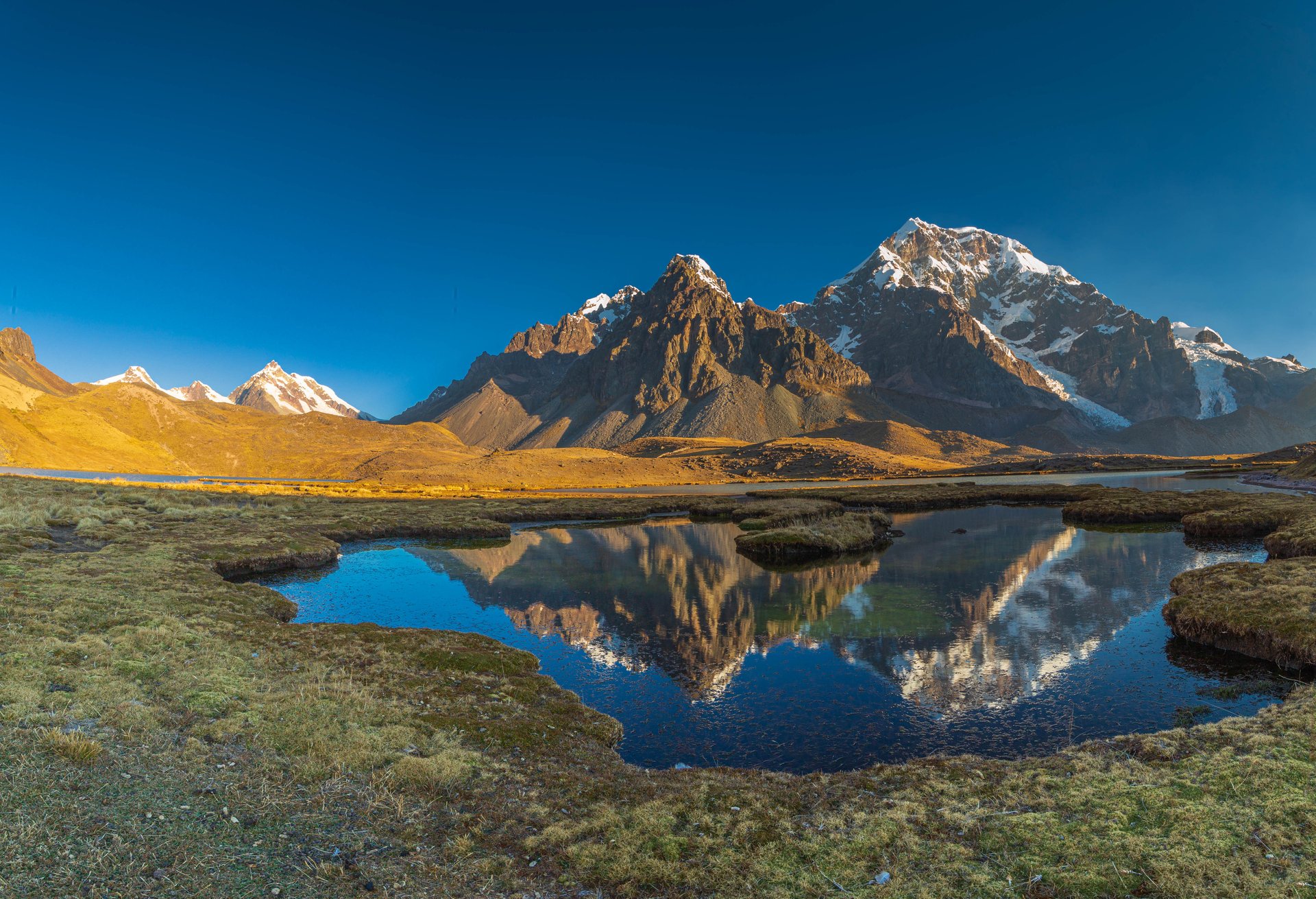
Iconic Ausangate landscapes + glacial lakes reflections
Access to Rainbow Mountain & Red Valley (no crowds angles)
Authentic Andean portrait photography opportunities
Wildlife & bird photography (Andean condors, puna species)
Guided by professional photography experts
The Ausangate region is considered one of the most remote and photogenic locations in Peru, offering unmatched visual diversity and isolation
Ready to capture the Milky Way in the Andes?
Secure your spot on one of the most exclusive photography tours in Peru for 2026. Contact us now to reserve your departure.
Day 1: Cusco Pacchanta Azulqocha (Sunset + Milky Way) Camp (4,600 m / 15,092 ft)
Drive time: 3.5–4 hours
Trek time: 1.5–2 hours
Photography Focus: High Andean landscapes, sunset over glaciers, nightscape reflections
We depart early from Cusco, heading southeast through the Andean highlands toward the remote village of Pacchanta, gateway to the Ausangate range. The landscape transforms quickly—rolling farmlands give way to rugged peaks and wide open skies.
From Pacchanta, it’s a short and scenic trek to our first campsite near Azulqocha Lake. Along the way, herds of alpacas, local shepherds, and towering glaciers provide incredible photographic subjects. Upon arrival, we set up camp beside the lake, perfectly positioned for both sunset and nightscape photography.
Photography Focus:
First high-altitude landscape compositions
Alpacas + environmental portraits
Sunset alpenglow on Ausangate
Night Session:
Milky Way over glaciers
Lake reflections + star reflections
One of the strongest first-night astro locations in Peru:
Milky Way over snow peaks and glacier
Star reflections on the lake
Tents lit from within under the stars
Light painting foregrounds with headlamps or lanterns
Bonus: In dry season months, you may catch the Galactic Core rising over the Ausangate range—ideal for vertical compositions and time-lapse sequences.
Day 2: Azulqocha Ninaparayoq (Deep Andes Landscapes (4,500 m / 14,763 ft)
Trek time: 2– hours
Photography Focus: High alpine landscapes, glacial lakes, wide valleys, and pristine night skies
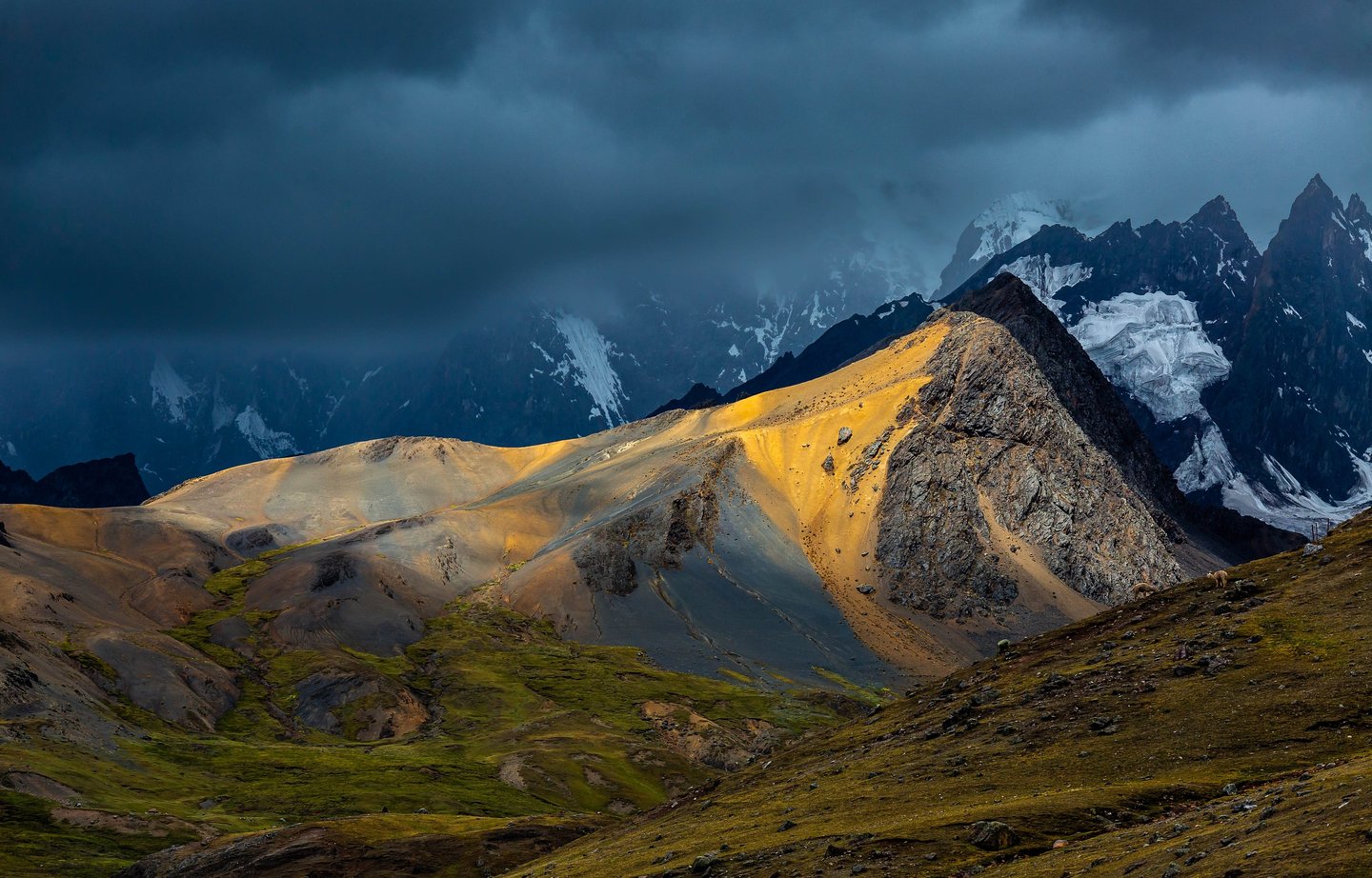
Today’s trail takes you deeper into the heart of the Huayhuash wilderness, crossing open valleys and ridgelines with sweeping views. We move from the crystalline waters of Azulqocha Lake, with its vibrant turquoise tones, toward the remote and wild camp of Ninaparayoq.
As we ascend, the landscape opens up into broad, cinematic vistas--perfect for wide-angle compositions. Jagged peaks pierce the sky, and you’ll pass herds of alpacas grazing beneath snow-dusted ridges. The highland light shifts constantly, creating dramatic contrast and layering in the mountains—ideal for both minimalist and grand landscape shots.
Nightscape Photography at NinaparayoqNinaparayoq is a dream location for astrophotographers. Sitting high above 4,500 meters with no light pollution for miles, this camp offers 360-degree views of the stars.
Once the sun dips behind the peaks and the twilight fades, the Milky Way unfurls across the sky like a luminous river. Glaciers and jagged silhouettes provide striking foregrounds, and the stillness of the night is surreal.
Photography Focus:
Wide-angle Andean landscapes
Leading lines + mountain layers
Minimalist compositions
Night Session:
Full Milky Way arch compositions
Star trails + glacier silhouettes
Pro Tip: Use your tent or a small foreground rock formation to add depth. If conditions are right, pre-dawn blue hour can gift you with a rare combo of starlight and first light on the peaks.
Day 3: Sunrise Azulqocha → Upis Valley (Full-Day Photo Flow)
Photography Focus:
Mirror reflections at sunrise
Intimate landscape (streams, textures)
Wildlife + bird photography opportunities
Cultural:
Shepherds + llamas → portrait photography storytelling
Sunset at Upis:
Golden light + steam from hot springs
Morning Trek: Azulqocha to Open Puna Valleys
After breakfast at camp, begin a gradual descent through high-Andean puna landscapes. The trail winds through rolling hills dotted with ichu grass, small wetlands, and seasonal streams.
Photography Opportunities Along the Way
Expansive valley scenes framed by snowcapped peaks
Leading lines created by trails, streams, and ridgelines
Wildlife photography opportunities (andean birds, grazing alpacas)
Environmental compositions showing scale and isolation
Soft morning light enhances texture and depth, ideal for fine-art landscape photography.
Midday: Alpine Creeks & Glacial Backdrops
As the sun rises higher, the route follows crystal-clear alpine creeks fed directly by Ausangate’s glaciers. These sections are perfect for intimate landscape compositions.
Photography Focus
Slow-shutter shots of flowing water
Macro and detail photography of moss, rocks, and wildflowers
Layered compositions combining water, midground hills, and distant peaks
A scenic lunch stop is planned beside a sheltered stream or meadow, allowing time to rest and photograph without rushing.
Afternoon: Approach to Upis Valley
The landscape gradually opens into the broad Upis Valley, offering uninterrupted views of the Ausangate massif. The light becomes warmer, creating dramatic contrast between illuminated slopes and shadowed valleys.
Photography Highlights
Classic Ausangate wide-angle landscapes
Shepherds with alpacas and llamas (when present), adding human scale
Natural framing using rock formations and grazing lands
Cloud movement and changing light over glaciers
This section is ideal for panoramic stitching and telephoto compression shots.
Late Afternoon: Arrival at Upis Altitude: ~4,400 m / 14,435 ft
Arrive at Upis, famous for its natural hot springs and open views toward Ausangate’s icy peaks. This is one of the most rewarding camps in the region for golden-hour photography.
Sunset Photography Session
Warm alpenglow on glacier-covered mountains
Steam rising from hot springs in cold air
Reflections and silhouettes during blue hour
Optional night photography and early Milky Way shots (seasonal)
After sunset, enjoy a well-earned soak in the hot springs, a perfect way to recover after a full photographic trekking day.
Why This Day Is Exceptional
Continuous photographic opportunities from dawn to dusk
Ideal balance of lakes, valleys, water features, and mountain vistas
Designed pacing for photographers—never rushed
One of the most scenic transitions in the Ausangate region
Day 4: Upis Arapa Pass Puka Qocha (Epic Landscapes) (4,650 m / 15,255 ft)
Photography Focus:
High mountain passes (5,000m+)
Dramatic terrain + scale compositions
Night Session:
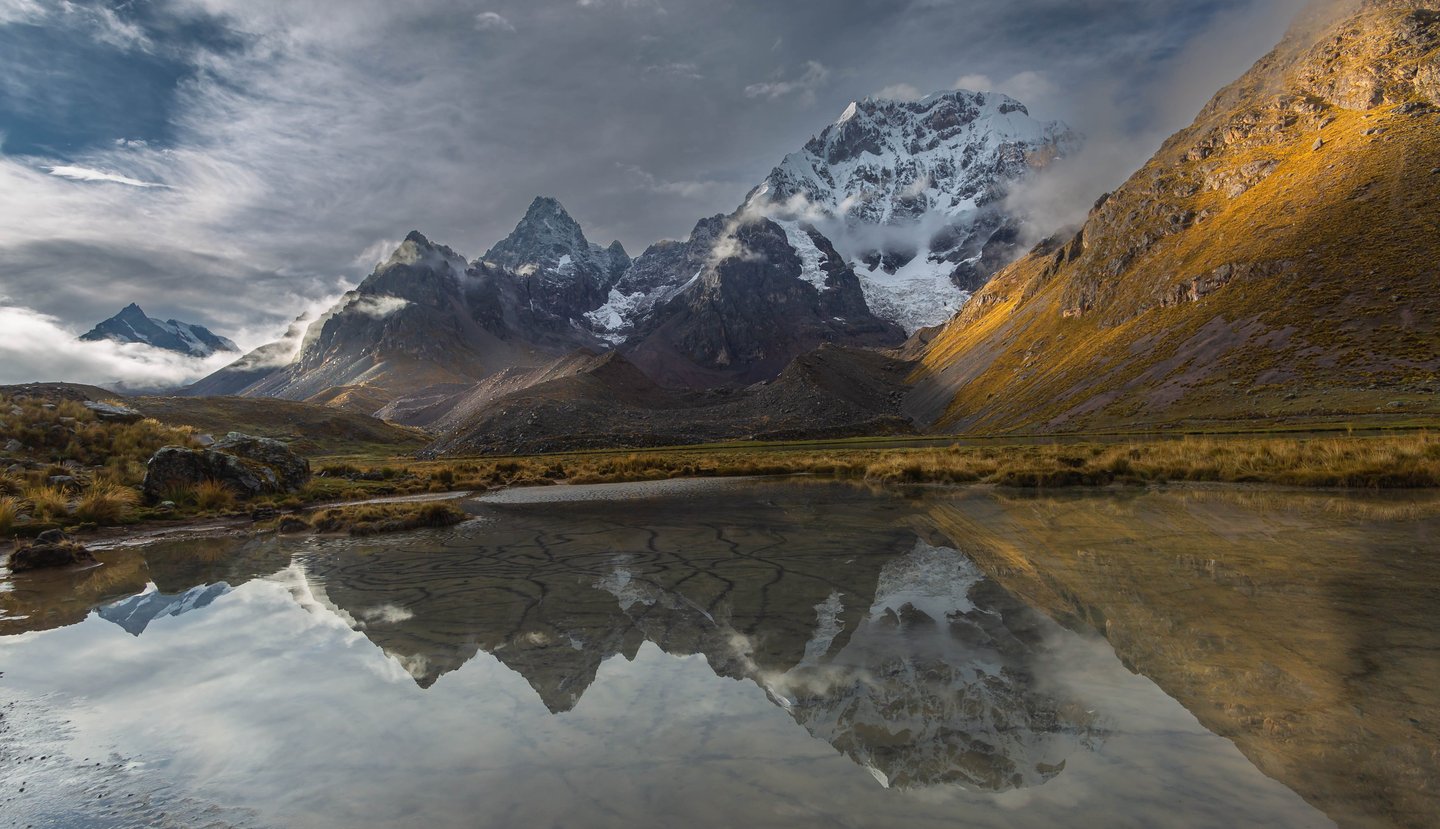
Milky Way + lake reflections
Advanced compositions (foreground + stars)
Photography Focus: Rugged mountain landscapes, glacial lakes, golden light, and night sky reflections
Today’s trail takes us over the stunning Arapa Pass, where the landscape shifts into a world of raw Andean drama. Jagged ridgelines, deep valleys, and snow-dusted peaks create a constant stream of breathtaking compositions. As we descend toward Puka Qocha, we pass isolated herder camps and mirror-like glacial lakes surrounded by surreal rock formations.
Golden Hour Magic:
In the late afternoon, the light turns warm and soft, wrapping the peaks in golden hues. This is the perfect time to capture minimalist scenes, leading lines through the valleys, and alpine wildlife wandering the open slopes.
Nightscape Photography at Puka QochaAs night falls over Puka Qocha, the world becomes silent—and the sky comes alive.
You're in a remote, high-altitude sanctuary, free of light pollution and full of photographic potential. With the glacial lake at your feet and the giants of the Vilcanota range above, this is one of the most inspiring nightscape locations in the Andes.
Night Photography Highlights:
Crystal-clear Milky Way arcing above the dark silhouettes of Ausangate and neighboring peaks
Still lake reflections of the stars—perfect for symmetry and long exposures
Light painting possibilities with boulders, tents, or foreground ice
Opportunity for star trails framed by jagged summits
Pro Tip: Set your tripod early and experiment with different compositions as the sky rotates—you may even catch the Southern Cross rising above the mountains.
This is the kind of night that leaves you in awe--pure silence, cosmic beauty, and total connection with nature.
Day 5: Puka Qocha Huampococha (Remote Photography Zone) (4,800 m / 15,748 ft)
Photography Focus:
Raw alpine textures
Isolated glacial lakes
Night Session:
Ultra-dark skies → perfect astro conditions
Creative night compositions + light painting
Photography Focus: Isolated alpine beauty, textured high-mountain terrain, and surreal night skies
From the peaceful shores of Puka Qocha, we continue our trek through a stunning high-altitude landscape of sculpted ridgelines, glacier-fed streams, and sweeping valleys carved by time. The terrain today is wild and raw—perfect for wide-angle shots that showcase the grand scale of the Cordillera Huayhuash.
By afternoon, we reach the hidden and lesser-known gem of Huampococha, a secluded lake cradled between jagged peaks. This remote location offers 360-degree views of the surrounding ridges and absolute silence—ideal for composing timeless landscape photos.
Nightscape Photography at HuampocochaWhen the sun drops behind the rugged skyline and the air turns crisp, Huampococha transforms into a celestial observatory. At over 4,800 meters, the thin air and lack of light pollution open the skies wide for breathtaking astrophotography.
Top Nightscape Opportunities:
The Milky Way arching over the lake and distant peaks
Silhouettes of jagged ridgelines under a blanket of stars
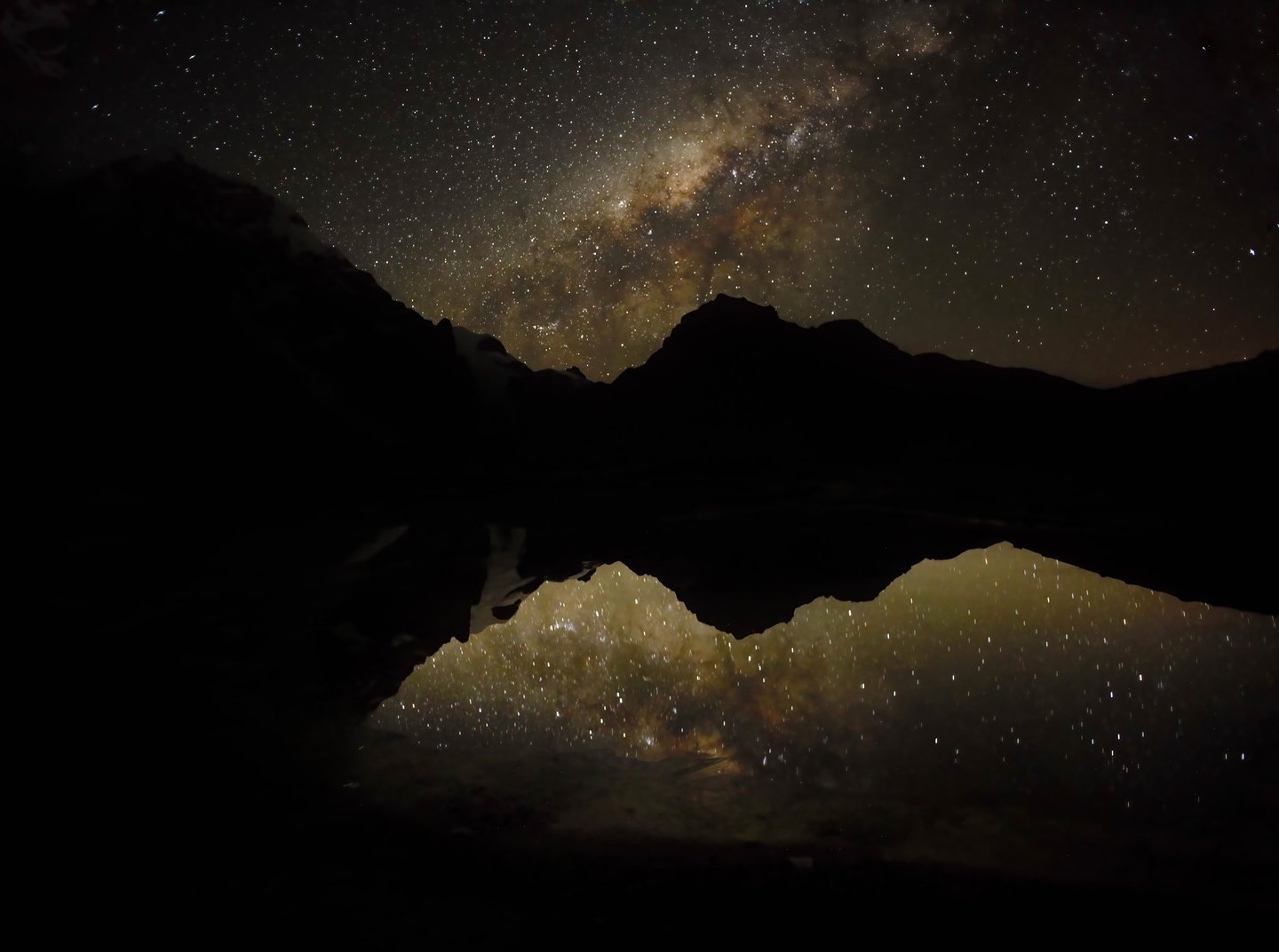
Reflections of starfields in the still, dark waters of Huampococha
Foreground elements like tents, boulders, or ice formations for creative compositions
Photo Tip: Use a wide-angle lens and foreground light painting to add depth and drama. Look east for the Milky Way core rising early in the morning during the dry season (April–September). The stillness of the lake offers rare chances for double-exposure-style mirror shots--stars above, stars below.
This is a night you’ll never forget—where the sky feels close enough to touch, and every frame is a masterpiece waiting to happen.
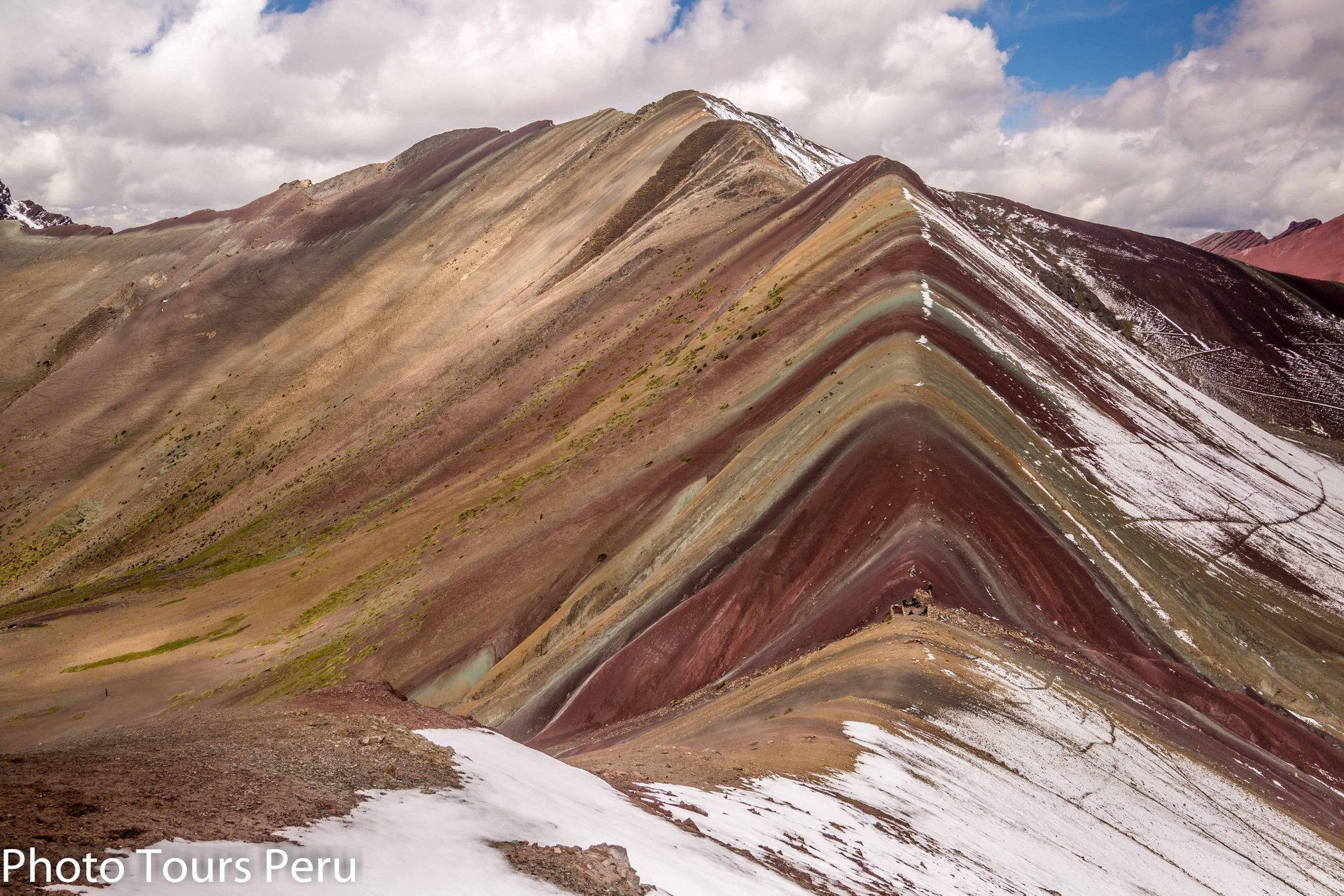
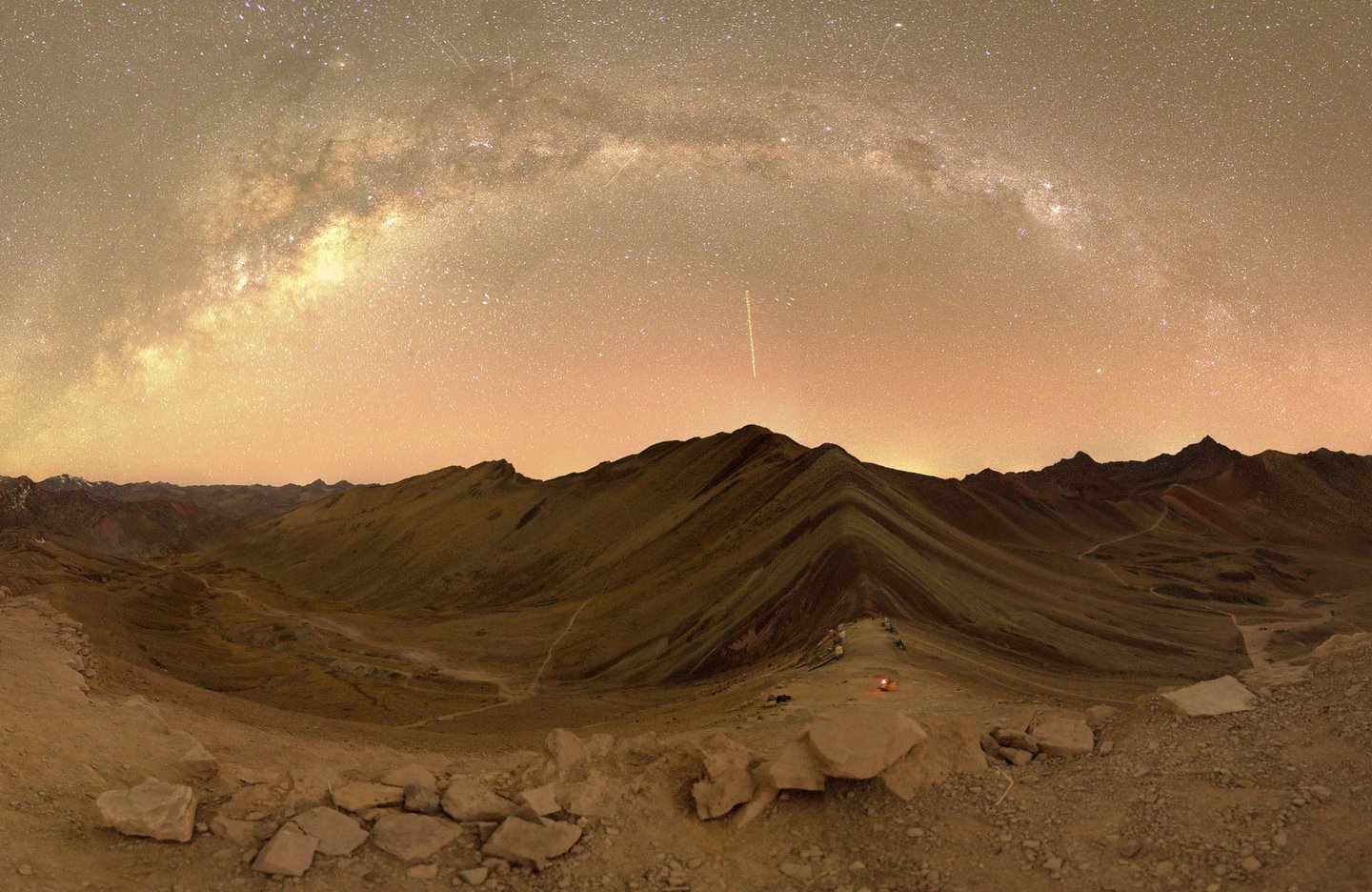
Day 6: Rainbow Mountain & Red Valley (Abstract Landscapes) (5,000 m / 16,404 ft)
Photography Focus:
Color layers (red, gold, green)
Abstract fine-art compositions
Unique Rainbow Mountain angles without crowds
Photographers report this area as one of the most surreal landscapes in the Andes, especially at sunrise/sunset
Photography Focus: Abstract landscapes, vibrant colors, and surreal nightscapes
This is a day straight out of a dream for landscape photographers. The trail leads us into the heart of the Red Valley, one of the most visually striking regions in the Andes. Deep crimson hills, mineral-rich slopes, and dramatic textures create a surreal, almost Martian atmosphere. Every step is a new composition—no two angles are alike.
We explore hidden corners of the Rainbow Mountain region far from the crowds, capturing unique perspectives of mineral-streaked ridgelines and undulating valleys painted in shades of red, gold, and green.
Photo Tip (Day): Use a polarizer to bring out rich contrasts and textures. Look for leading lines formed by the ridges and color layering for dramatic wide shots.
Nightscape Magic in the Red ValleyAs the sun dips behind the jagged ridges, the real magic begins. You’ll set up camp surrounded by blood-red hills and silent peaks, under one of the darkest skies in Peru.
With almost no light pollution, the Milky Way explodes overhead. The landscape takes on an otherworldly glow, with the mineral-rich terrain subtly reflecting starlight.
Night Photography Highlights:
Milky Way arching over the Rainbow Mountains
Light painting across the red ridges
Silhouetted peaks beneath a star-packed sky
Long exposures revealing star trails swirling above surreal terrain
Bonus Tip: Use a wide-angle lens (14–24mm), shoot low to capture both sky and terrain, and time your shot with the Galactic Center rising over the red ridgelines for that epic portfolio moment.
Why Photograph Ausangate?
Ausangate offers an unusual combination for landscape and astrophotographers: dramatic high-altitude mountains, glacial lakes, remote valleys and expansive night skies.
Dark Andean Landscapes
The remote setting of the Cordillera Vilcanota provides opportunities for night-sky photography away from major urban areas. Actual visibility depends on weather, moon phase, atmospheric conditions and seasonal factors.
Milky Way Photography
During suitable periods, photographers can work on compositions featuring the Milky Way above Ausangate's snow-covered peaks, alpine lakes and high-Andean valleys.
Landscape & Astrophotography in One Expedition
The journey is structured around both daylight and nighttime photography. Sunrise, golden hour, blue hour and sunset provide opportunities for landscape photography, while clear nights may allow Milky Way, star-trail and long-exposure work.
High-Altitude Photography
The dramatic elevation and open terrain create opportunities for wide-angle compositions, panoramic images, mountain silhouettes, reflections and environmental storytelling.
Ausangate & Rainbow Mountain
The expedition combines the landscapes of Ausangate and Rainbow Mountain, giving photographers access to contrasting geological formations, colorful slopes, glacial scenery and traditional Andean environments.
What Can You Photograph on the Ausangate Trek?
Throughout the expedition, photography opportunities may include:
Milky Way over the Andes
Ausangate Mountain and surrounding glaciers
Alpine lake reflections
Star trails and long-exposure nightscapes
Sunrise and golden-hour landscapes
Blue-hour mountain compositions
Rainbow Mountain and colorful geological formations
High-Andean valleys and puna landscapes
Alpacas, llamas and Andean wildlife
Local communities and traditional Andean life
Mountain silhouettes beneath the night sky
Streams, rocks, textures and high-altitude landscapes
Environmental and documentary photography
Photographic conditions vary according to weather, season, moon phase and atmospheric conditions, so every departure offers its own combination of light and celestial opportunities.
Why Choose Photo Tours Peru?
Photography-focused itinerary
Professional photographer-guide
Small-group experience
Dedicated sunrise and sunset sessions
Night-sky photography opportunities
Milky Way and star-trail guidance
Landscape composition support
Time to photograph instead of rushing between viewpoints
Remote Andean landscapes
Local cultural and environmental experiences
Photography guidance for different skill levels
Responsible photography practice
Built for Photographers, Not Just Trekkers
This expedition is designed around photography.
Instead of treating photography as an activity added to a trekking itinerary, we build the experience around the conditions photographers need to create strong images.
Depending on the conditions, your photography sessions may include:
Landscape Photography
Work with leading lines, mountain layers, reflections, foreground elements and changing Andean light.Milky Way Photography
Learn how to plan compositions around the Milky Way, focus accurately at night and balance the sky with the mountain foreground.Star Trails
Explore long-exposure techniques for creating circular or linear star-trail compositions above the Andes.Nightscape Photography
Combine natural landscapes with the night sky, silhouettes and controlled foreground illumination.Golden Hour & Blue Hour
Use the softer light around sunrise and sunset to photograph Ausangate's mountains, lakes and valleys.Photography Guidance
Receive practical guidance with composition, exposure, focusing, tripod technique and night photography settings.Is Ausangate good for astrophotography?
Ausangate's remote high-altitude environment provides excellent opportunities for night-sky photography when weather, moon phase and atmospheric conditions are favorable.
Can I photograph the Milky Way in Ausangate?
Yes. Depending on the season, moon phase, weather and visibility, photographers may have opportunities to photograph the Milky Way above the Ausangate mountains and surrounding landscapes.
What camera equipment should I bring for Ausangate astrophotography?
A mirrorless or DSLR camera, a wide-angle lens, sturdy tripod, spare batteries, memory cards and a headlamp are recommended. A fast wide-angle lens is particularly useful for Milky Way photography.
Is this trek suitable for beginner photographers?
Yes. The expedition can accommodate photographers at different skill levels. Photography guidance can cover basic camera settings, composition, focusing and night photography techniques.
Is Ausangate difficult?
Ausangate is a high-altitude trekking destination. The elevation is an important consideration, and participants should be prepared for strenuous walking in mountain conditions.
What can I photograph besides the Milky Way?
The expedition also offers opportunities for landscape photography, glacial mountains, alpine lakes, Rainbow Mountain, alpacas, Andean landscapes, sunrise, sunset and local cultural scenes.
When is the best time for astrophotography in Ausangate?
The best period depends on your photographic goal, seasonal weather and the lunar cycle. We recommend planning the departure around the desired night-sky conditions rather than relying on a single “best month.”
Is this a photography tour or a trekking tour?
It is a photography-focused trekking expedition. The itinerary combines trekking through the Ausangate region with dedicated opportunities for landscape and night-sky photography.
:::
Very difficult: Long hikes and camping at high altitude
Our Peru photo trek will mainly focus on hiking and capturing the most iconic landscapes in the Rainbow mountain, the world’s highest tropical mountain ranges. This time of year is perfect for hiking, as it coincides with the dry season, and ideal for astro, as it’s the peak of Milky Way season in the Southern Hemisphere, with 10+ hours of Milky Way visibility at night.
Professional guide
Meals
Transport
Hotel pick-up and drop-off
Food and drinks
Optional ExtrasGroup Size :1 – 8 Guests
Experience | Difficulty
Beginner, amateur, enthusiast and semi-pro photographers
DSLR, mirrorless, compact or iPhone cameras
Moderate schedule
Travel by car or minibus
Moderate elevation changes and lots of walking and hiking (none of our adventures have difficult hikes)
(non-photographers also welcome)
6 Days Ausangate Rainbow Mountain Treks
Travel, landscape, nature, wildlife, and people photography
Professional photographer | guide
Photo walks & discussions
Small group size (1-8 guests)
Camping
Breakfasts
All Meals
National Park Permits
Local transportation
AccommodationsCamping.
What’s Included
Not Included
Price per person:2026
1 person : US$1750.00 per person
2 people : US$1300.00 per person
3 people: US$1250.00 per person
4 people : US$1200.00 per person
5 people : US$1150.00 per person
6 people : US$1100.00 per person
7+ people : US$1050.00 per person.
Green Team Commitment – Responsible Photography with Photo Tours Peru
At Photo Tours Peru, we believe photography should protect the places we explore. Every photography expedition—from the Andes to the Amazon—is guided by a Green Team philosophy, ensuring that our tours respect nature, wildlife, and local communities.
Our goal is simple: capture extraordinary images while leaving every location better than we found it.
1. Leave No Trace Photography
Our photography tours follow the internationally recognized Leave No Trace principles, which emphasize minimizing environmental impact when traveling in nature.
Key practices include:
• Carry out all trash and waste
• Avoid single-use plastic bottles
• Stay on established trails and paths
• Do not move rocks, plants, or natural elements for photos
• Leave archaeological sites and landscapes untouched
These practices protect fragile ecosystems and help preserve natural landscapes for future generations.
2. Respect Wildlife and Natural Habitats
Wildlife photography requires patience and responsibility.
On our tours we:
• Observe animals from a safe distance
• Never feed or disturb wildlife
• Avoid loud noise or sudden movement
• Use telephoto lenses instead of approaching animals
If wildlife changes behavior, it means the photographer is too close and must move away.
3. Protect Cultural Heritage
Many photography tours visit indigenous communities and historic sites.
Our Green Team approach includes:
• Always asking permission before photographing people
• Respecting cultural traditions and sacred places
• Supporting local artisans and communities
• Avoiding staged or exploitative photography
Photography should tell respectful human stories, not exploit them.
4. Small Group Photography Expeditions
All Photo Tours Peru expeditions prioritize small groups to reduce environmental impact.
Benefits:
• Less pressure on fragile ecosystems
• More respectful interaction with local communities
• Better photography opportunities
• Lower environmental footprint
Sustainable photo tours often limit groups to ensure minimal disturbance to nature.
5. Support Local Communities
Responsible tourism helps protect destinations when local people benefit from tourism.
Photo Tours Peru supports:
• Local guides and communities
• Family-owned lodges and homestays
• Indigenous cultural projects
• Local conservation initiatives
When communities benefit economically from tourism, they are more motivated to protect their environment and culture.
Contact
Email: phototourperu@gmail.com
Phone: +51 940188346
© 2025. All rights reserved.
Designed by Zihna