Rainbow Mountain Astrophotography Tour – 3-Day Peru Trek
Home / Rainbow Mountain Astrophotography Trek 3 Day Stargazing
Rainbow Mountain Astrophotography Trek in Peru – 3 Days
A 3-day photography expedition to Vinicunca and the high Andes, combining mountain landscapes, sunset photography, Milky Way opportunities, and sunrise sessions.
Explore the spectacular landscapes of Peru's Rainbow Mountain on a 3-day Rainbow Mountain astrophotography trek with Photo Tours Peru. Designed for landscape photographers, astrophotographers, and adventurous visual storytellers, this expedition combines high-altitude trekking with dedicated opportunities to photograph the colorful mineral ridges of Vinicunca, the surrounding Andes, and the night sky.
Travel through remote highland landscapes, photograph dramatic red and ochre hills, and compose images featuring alpine lakes, rugged ridgelines, alpacas, and snow-covered Andean peaks. After sunset, take advantage of suitable dark-sky conditions to practice Milky Way photography, long exposures, and star-trail techniques when weather, moonlight, and astronomical conditions allow.
Unlike a standard Rainbow Mountain day trip, this photography-focused trek allows more time for creative exploration, changing light, and carefully planned compositions. The itinerary is intended for photographers who want to work with foreground detail, mountain silhouettes, leading lines, and the relationship between the Andean landscape and the night sky.
Whether you use a professional mirrorless camera, a DSLR, or a capable compact camera, the experience can be adapted to your photographic interests and skill level.
Tour duration: 3 days / 2 nights
Destination: Vinicunca (Rainbow Mountain), the Ausangate region, and surrounding Andean highlands
Starting point: Cusco, Peru
Photography focus: Astrophotography, Milky Way photography, star trails, landscape photography, sunrise, and sunset
Accommodation: Camping, subject to confirmed campsite arrangements
Meals: Breakfast, lunch, and dinner during the trek, as specified in the confirmed itinerary
Difficulty: Challenging, primarily because of altitude, cold nights, and trekking conditions
Tour style: Small-group or private departure, according to the selected package
Rainbow Mountain Photography Highlights
Milky Way Photography in the Peruvian Andes
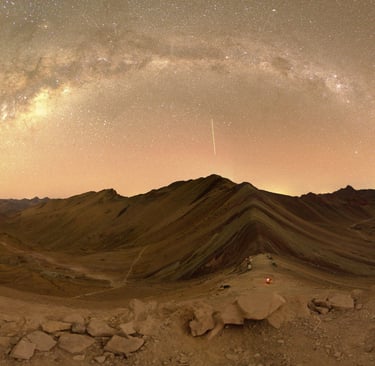
Practice nightscape photography in the high Andes, using mountain silhouettes, ridgelines, and foreground textures to create depth in your compositions. Milky Way visibility depends on the season, moon phase, astronomical timing, and weather.
Sunset and Sunrise at Vinicunca
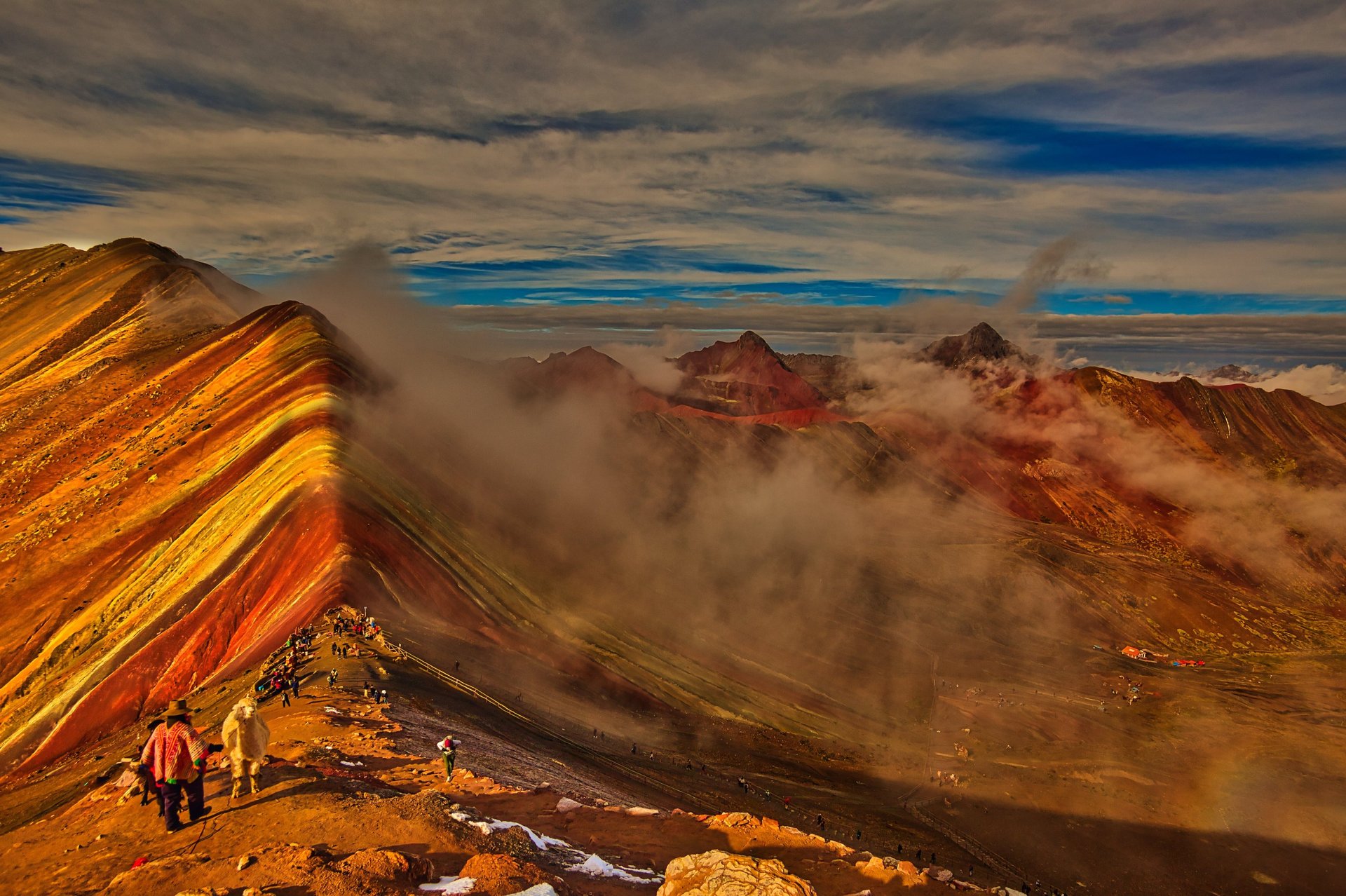
Photograph the mineral-colored slopes of Rainbow Mountain as changing sunlight reveals their geological patterns, contrasting textures, and natural colors. Early and late light can offer opportunities for more controlled compositions than harsh midday sunlight.
Star Trails and Long-Exposure Nightscapes
Experiment with long exposures and star-trail compositions above the Andean landscape. Your guide can help you plan compositions and camera settings according to conditions and your equipment.
Andean Landscape Photography
Work with leading lines, layered mountains, alpine terrain, dramatic clouds, and wide-angle or telephoto compositions. The trek also offers opportunities to photograph alpacas and highland scenery when encountered along the route.
Photography Guidance in the Field
Learn practical techniques for focusing at night, balancing foreground exposure, controlling highlights, managing noise, and choosing compositions that connect the landscape with the sky.
Why Choose a Photography-Focused Rainbow Mountain Trek?
A conventional Rainbow Mountain visit is usually designed around reaching the viewpoint and returning to Cusco. This three-day expedition is planned around photography opportunities, with time allocated to the landscape, changing light, and potential night-sky sessions.
The priority is not to promise perfect skies or guaranteed Milky Way visibility. Instead, the expedition gives photographers a structured opportunity to work in the high Andes and develop a varied portfolio of landscape and nightscape images.
Contact Photo Tours Peru to confirm the route, campsite arrangements, available dates, and the best departure window for your photographic goals.
3-Day Rainbow Mountain Astrophotography Itinerary
Day 1: Cusco – Quesiuno – Anantapata – Huampococha
Photography focus: Andean landscapes, red and ochre mountain textures, alpine scenery, sunset, and night-sky photography opportunities.
Depart from Cusco by private or scheduled tour transportation, depending on your selected package. Travel toward the highland trailhead at Quesiuno, where the trekking portion begins.
As you move through the remote landscapes of the Ausangate region, photograph the changing terrain, broad Andean valleys, colorful mineral formations, and snow-covered peaks. The route may also offer opportunities for environmental portraits of alpacas and local highland life, where appropriate and with permission.
Continue toward Anantapata and the confirmed overnight campsite near Huampococha, according to the final operational route. Your guide will identify suitable places to stop for landscape photography without compromising trekking safety or the group's schedule.
After setting up camp, prepare your camera equipment for an evening photography session. Depending on the season and conditions, work on wide-angle compositions, mountain silhouettes, foreground illumination, or star-trail planning.
Night photography session: A Milky Way or star-trail session may be possible if the sky is sufficiently clear and astronomical conditions are favorable. The exact timing depends on the date, moon phase, and Milky Way visibility.
Overnight: Camping at the confirmed campsite.
Meals: Breakfast, lunch, and dinner included.
Day 2: Huampococha – High-Andean Photography Locations – Rainbow Mountain Area
Photography focus: Landscape textures, sunset photography, mountain silhouettes, Milky Way compositions, and long exposures.
Start the day with breakfast and, if conditions allow, an early landscape photography session. Morning light can reveal subtle color variations across the highland terrain and create opportunities for panoramic and environmental compositions.
After breakfast, continue along the confirmed trekking route toward the designated Rainbow Mountain photography area. The actual route and campsite will depend on authorized access, weather, trail conditions, and the operating arrangements confirmed before departure.
During the day, concentrate on the photographic details that make this region distinctive: layered ridgelines, mineral-colored slopes, alpine terrain, high-altitude lakes where accessible, and distant peaks of the Vilcanota range.
In the afternoon, prepare for sunset photography. Work with side lighting, shadows, and foreground details to create stronger landscape compositions. Your guide can help you choose camera settings and shooting positions appropriate to the conditions.
After dinner, prepare for a night-sky session if conditions permit. Depending on astronomical timing, you may work on Milky Way compositions, star trails, or mountain silhouettes beneath the stars.
Important: Access to the Rainbow Mountain viewpoint and the final overnight location must be confirmed in advance. Do not assume that camping is permitted at the summit or that the Milky Way will be visible on every departure.
Overnight: Camping at the confirmed second-night location.
Meals: Breakfast, lunch, and dinner included.
Day 3: Sunrise Photography at Vinicunca – Red Valley – Return to Cusco
Photography focus: Sunrise, Rainbow Mountain landscape photography, mineral textures, Red Valley, and final Andean compositions.
Wake early for a sunrise photography session at the authorized viewpoint, subject to weather, access, and the final route. Photograph the changing colors and shadows across the distinctive mineral formations of Vinicunca.
Work with wide-angle lenses to capture the scale of the mountain landscape or use a telephoto lens to isolate repeating patterns, ridgelines, and contrasting colors.
Where the confirmed itinerary and local access permit, continue toward the Red Valley area. Its red slopes and layered terrain offer different photographic compositions from the main Rainbow Mountain viewpoint.
After the photography sessions, return along the designated trail to the transport pickup point. Travel back to Cusco, with the arrival time depending on road conditions, trekking pace, and local access.
Photography focus: Sunrise landscape photography, abstract geological patterns, wide panoramas, and final Andean landscape images.
Meals: Breakfast and lunch included. Dinner is not included unless arranged in advance.
Tour concludes: Arrival in Cusco, usually in the afternoon or evening, subject to route and road conditions.
What's Included in the Rainbow Mountain Astrophotography Trek?
Included
Transportation between Cusco and the designated trailhead, according to the confirmed package.
Professional trekking guide familiar with the route and high-altitude conditions.
Photography-focused guidance during scheduled field sessions, as specified in your booking.
Two nights of camping accommodation.
Breakfasts, lunches, and dinners during Days 1 and 2.
Breakfast and lunch on Day 3.
Camping equipment, if explicitly listed in your confirmed package.
Drinking water and snacks, according to the agreed meal and support plan.
Entrance fees and local permits required for the confirmed route, where applicable and included in the quotation.
First-aid kit and emergency communication arrangements appropriate to the operating route.
Before booking: Confirm whether tents, sleeping bags, sleeping mats, trekking poles, porters, camping staff, and luggage transport are included. These services must not be advertised as included unless they are part of the actual package.
Not Included
International flights or domestic flights to and from Cusco.
Accommodation in Cusco before or after the trek.
Travel insurance and emergency evacuation coverage.
Personal camera bodies, lenses, tripods, filters, batteries, and memory cards.
Personal trekking clothing, footwear, and other individual equipment unless specified.
Tips for guides, drivers, cooks, and support staff.
Alcoholic beverages and personal purchases.
Horse rental or other optional assistance on the trail.
Additional hotel nights, meals, or transport outside the agreed itinerary.
Additional services not expressly listed in the final booking confirmation.
Meals and Dietary Requirements
Breakfast, lunch, and dinner are included on the first two days. Breakfast and lunch are included on Day 3; dinner in Cusco is not included unless arranged in advance.
Please advise us of vegetarian, vegan, or other dietary requirements when booking so we can confirm the available arrangements.
Accommodation and Camping
The expedition uses camping accommodation for two nights, subject to confirmation of authorized campsites and the final route. Nights can be very cold at high elevation, so suitable sleeping equipment and insulated clothing are essential.
Photography Equipment Recommendations
Bring a camera or capable compact system, wide-angle lens, sturdy tripod, spare batteries, memory cards, headlamp with a red-light mode, lens cloth, and weather protection. A fast wide-angle lens is particularly useful for Milky Way photography, but equipment should be selected according to your experience and photographic goals.
Rainbow Mountain Astrophotography Trek — 3 Days
Price per person: 2026
1.-person $1,150
2.- People $820
4.- People$760
6.- People $700
Frequently Asked Questions
Is the Rainbow Mountain Astrophotography Trek suitable for photographers?
Yes. The trek is designed for landscape photographers, astrophotographers, and travelers interested in night-sky photography. Participants should be comfortable with high-altitude trekking and cold outdoor conditions. Photography guidance can be adapted to different experience levels.
Can I photograph the Milky Way at Rainbow Mountain?
Milky Way photography may be possible when the galactic core is above the horizon and the moonlight, weather, and timing are favorable. Clear skies are never guaranteed, so we recommend selecting travel dates according to astronomical conditions and maintaining flexibility during the expedition.
What is the best time for Rainbow Mountain astrophotography?
The best dates depend on the Milky Way season, moon phase, local weather, and the photographic compositions you want to create. The dry season can offer useful planning opportunities, but clouds, wind, and precipitation remain possible in the Andes throughout the year.
How difficult is the three-day Rainbow Mountain trek?
The trek is physically challenging because of the altitude, uneven trails, cold nights, and extended time outdoors. Previous trekking experience and acclimatization in Cusco are recommended. The final itinerary should specify the actual daily walking times and maximum elevations.
Do I need professional camera equipment?
No. A DSLR, mirrorless camera, or capable compact camera can be suitable. A wide-angle lens and tripod are particularly useful for nightscape photography. Bring spare batteries, memory cards, and weather protection.
Are meals and camping included?
The proposed itinerary includes two nights of camping, breakfast, lunch, and dinner on Days 1 and 2, and breakfast and lunch on Day 3. Camping equipment, permits, transport, and support services must be confirmed in your final quotation.
Is this a private Rainbow Mountain photography tour?
Private and small-group arrangements should be quoted separately. Contact Photo Tours Peru to confirm whether your preferred dates are available for a private departure and what services are reserved exclusively for your party.
What happens if the weather is cloudy?
The guide will adapt the photography schedule where conditions and safety permit. Cloudy weather may reduce Milky Way visibility but can still provide opportunities for mountain landscapes, textures, atmospheric scenes, and alternative compositions.
How do I book the Rainbow Mountain Astrophotography Trek?
Contact Photo Tours Peru with your preferred dates, group size, camera equipment, and photography goals. We will confirm the route, available services, price, and booking conditions before requesting a deposit.
Book Your Rainbow Mountain Astrophotography Trek
Join Photo Tours Peru for a three-day photography expedition through the colorful landscapes of Vinicunca and the high Andes.
Photograph mountain textures in changing light, explore high-altitude landscapes, and plan nightscape sessions under the Andean sky. Request your itinerary and quotation to confirm the best arrangements for your photography goals.
Request availability and 2027 pricing with Photo Tours Peru.
Milky Way • Nightscape • Landscape Photography • Vinicunca • Ausangate

Contact
Email: phototourperu@gmail.com
Phone: +51 940188346
© 2025. All rights reserved.
Designed by Zihna