
Salkantay Trek to Machu Picchu Photography Tour – 6 Days
Home / salkantay-trek-machu-picchu-astrophotography-tour-6-days
Salkantay Trek & Machu Picchu Astrophotography Tour – 6 Days
A photography-focused expedition through the Peruvian Andes, combining high-altitude landscapes, Milky Way photography, alpine scenery, and Machu Picchu.
Explore the spectacular landscapes of the Peruvian Andes on a six-day Salkantay Trek and Machu Picchu photography tour designed for landscape photographers, astrophotographers, and adventurous travelers who want to create more than ordinary travel photographs.
From the turquoise waters of Humantay Lake to the dramatic mountain scenery around Salkantay, this expedition combines hiking, landscape photography, night-sky sessions, and the cultural heritage of Machu Picchu.
The itinerary is designed around opportunities to photograph during sunrise, golden hour, blue hour, and nighttime, when weather, moonlight, cloud cover, and seasonal conditions allow. You will have opportunities to work on foreground composition, mountain reflections, panoramic landscapes, long exposures, and Milky Way photography.
This is a physically demanding high-altitude trek, with photography stops incorporated into the daily hiking schedule. It is suitable for photographers and outdoor enthusiasts who are comfortable hiking at altitude and carrying their personal camera equipment.
Duration: 6 days / 5 nights
Destination: Salkantay region and Machu Picchu, Peru
Photography focus: Landscape photography, astrophotography, Milky Way, star trails, mountain scenery, and Inca heritage
Maximum group size: 8 guests, subject to final operating arrangements
Accommodation: Mountain camps and accommodation in Aguas Calientes
Meals: Breakfast, lunch, and dinner during the trekking portion, as specified below
Difficulty: Challenging due to altitude, long walking days, and mountain conditions
Photography Highlights
Photograph the turquoise waters and glacial scenery of Humantay Lake.
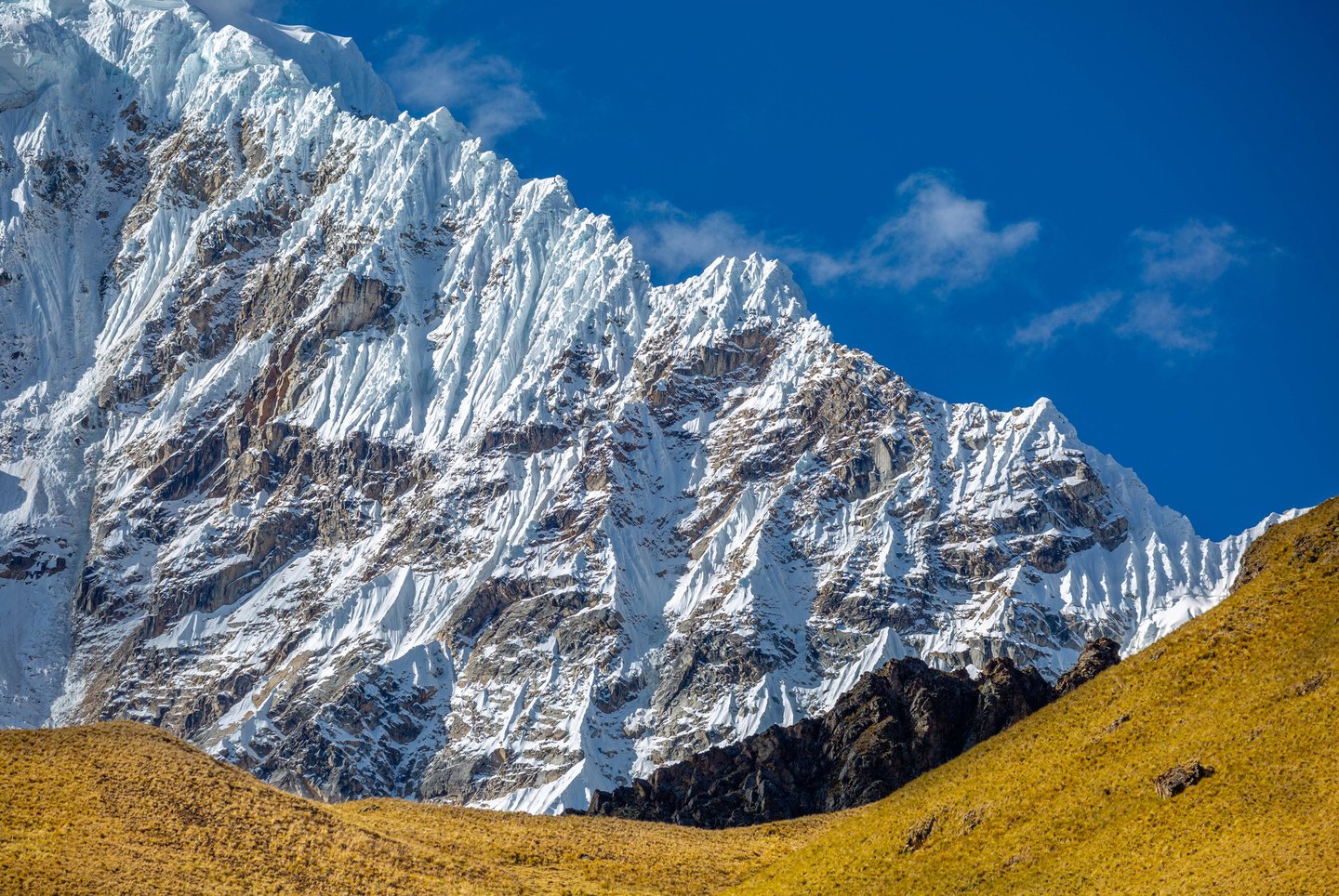
Capture the snow-covered peaks and dramatic terrain around Salkantay.
Plan Milky Way and star-trail compositions during suitable nighttime conditions.
Work with sunrise, sunset, golden hour, and blue-hour light in high-altitude landscapes.
Photograph the changing scenery as the route descends toward Qolpapampa and Hydroelectric.
Explore the archaeological landscape of Machu Picchu with a camera-focused approach.
Night-sky photography depends on cloud cover, moon phase, weather, visibility, and the time of year. Clear skies and specific celestial alignments cannot be guaranteed.
Six-Day Salkantay Photography Itinerary
Day 1: Cusco – Mollepata – Humantay Lake – Soraypampa (3,900 m / 12,795 ft)
We depart early from Cusco and travel through Mollepata toward Soraypampa, the starting area for our Salkantay mountain experience. Along the drive, the landscape changes from Andean farmland and rolling hills to rugged mountain terrain.
After reaching the Soraypampa area, we visit Humantay Lake according to the confirmed hiking schedule. The turquoise water, surrounding mountain slopes, and glacial scenery provide opportunities for wide-angle compositions, reflection photography, and detailed landscape images.
In the late afternoon, we focus on changing light across the surrounding peaks and alpine terrain. After dinner, conditions permitting, we prepare for an introductory night-sky photography session.
Photography focus: Humantay Lake, mountain textures, reflections, golden-hour landscapes, and initial astrophotography.
Meals: Lunch and dinner included. Breakfast before departure is not included unless arranged.
Overnight: Soraypampa campsite.
Day 2: Soraypampa – Humantay Lake Area – Japanese Pampa (approximately 4,200 m / 13,780 ft)
We begin with early-morning photography in the Soraypampa area, taking advantage of the soft light on the surrounding mountains. Following breakfast, we continue toward Japanese Pampa according to the confirmed route.
The day combines high-altitude trekking with opportunities to photograph glacial valleys, alpine terrain, mountain ridgelines, and changing cloud formations. We allow time for selected stops without compromising the group's safety or the planned walking schedule.
After arriving at camp, we review the available compositions and prepare camera equipment for the evening.
If the sky is clear and the moon phase is favorable, we can photograph the Milky Way, star trails, and the mountain silhouettes surrounding the campsite.
Photography focus: Mountain landscapes, alpine foregrounds, wide-angle compositions, blue hour, and night-sky photography.
Meals: Breakfast, lunch, and dinner included.
Overnight: Japanese Pampa campsite.
Day 3: Carhuacocha – Japanese Pampa – Soyrococha (approximately 4,400 m / 14,435 ft)
We continue through the high-Andean landscape, following the confirmed trail itinerary between the named locations. This day is designed for photographers who want to capture the scale and textures of the mountain environment.
Along the route, we look for compositions featuring glacial terrain, high-altitude wetlands, mountain ridgelines, streams, and dramatic changes in cloud and light. Stops will be coordinated with the guide according to weather, trail conditions, and the group's walking pace.
After reaching the planned campsite, enjoy time to rest, organize equipment, and prepare for sunset photography.
At night, we may attempt wide-field Milky Way images or star trails if weather conditions are suitable.
Photography focus: High-Andean landscapes, mountain details, dramatic skies, panoramic images, and astrophotography.
Meals: Breakfast, lunch, and dinner included.
Overnight: Soyrococha campsite, subject to confirmation of the final route.
Day 4: Soyrococha – Wayracmachay (approximately 4,000 m / 13,123 ft)
After breakfast, we continue through the mountain landscape toward Wayracmachay. The scenery offers opportunities to photograph expansive valleys, rugged mountain profiles, glacial terrain, and the transition of light across the high Andes.
We schedule photography stops at appropriate locations along the trail and use the available light to create a varied landscape portfolio.
Upon reaching camp, take time to rest and prepare for the evening. If skies are clear, the surrounding peaks and rocky foregrounds can provide interesting compositions for wide-angle night photography and star trails.
Photography focus: Mountain panoramas, foreground composition, changing light, long exposures, and star trails.
Meals: Breakfast, lunch, and dinner included.
Overnight: Wayracmachay campsite.
Day 5: Wayracmachay – Qolpapampa – Hydroelectric – Aguas Calientes
Today, the scenery changes as we descend from the high mountain environment toward the greener landscapes around Qolpapampa and Hydroelectric.
The route offers opportunities to photograph contrasting vegetation, steep valley walls, river landscapes, and the transition from the Andes toward the cloud forest.
We continue to Aguas Calientes according to the confirmed transport and walking arrangements. Because this is a long transfer and trekking day, photography stops will depend on the actual schedule, weather, and trail conditions.
Upon arrival in Aguas Calientes, settle into the accommodation and prepare for the following day's visit to Machu Picchu.
Photography focus: Landscape transitions, river valleys, vegetation, environmental details, and travel photography.
Meals: Breakfast, lunch, and dinner included.
Overnight: Hotel in Aguas Calientes.
Day 6: Aguas Calientes – Machu Picchu – Cusco
We depart early for Machu Picchu, following the entry time and circuit specified in the confirmed ticket reservation.
Inside the archaeological site, we focus on photographing the Inca architecture, stonework, terraces, mountain scenery, and the relationship between the citadel and its dramatic surroundings. We work with the light available during the permitted visit and follow the site's visitor regulations.
Your guide will help you understand the historical context of the site and identify appropriate photographic viewpoints within the authorized circuit.
After the visit, we return to Aguas Calientes and continue the return journey to Cusco using the train and ground transportation included in the confirmed package.
Photography focus: Machu Picchu landscape photography, Inca architecture, environmental compositions, and cultural heritage.
Meals: Breakfast included. Lunch and dinner are not included unless specified in the final booking.
End of tour: Cusco.
Salkantay Astrophotography Trek — 6 Days / 5 Nights
Group size Price per person
1 traveler $2,350
2 travelers $1,550
3 travelers $1,450
4 travelers $1,375
5 travelers $1,325
6 travelers $1,275
8 travelers $1,225.
What's Included in the Salkantay Photography Trek?
Professional photography-focused guide: Photography guidance throughout the itinerary, including landscape composition, exposure, and night-sky techniques. Confirm whether a dedicated professional photographer accompanies every departure.
Private or small-group transportation: Scheduled ground transportation between Cusco, Mollepata, the trekking route, Hydroelectric, and the return connection from Aguas Calientes.
Accommodation for five nights: Mountain camping accommodation and one hotel night in Aguas Calientes, according to the final confirmed itinerary.
All scheduled trekking meals: Breakfast, lunch, and dinner on Days 1–5, plus breakfast on Day 6, as outlined in the itinerary.
Mountain support team: Trekking guide, cook, and camping support staff, as applicable to the confirmed operating arrangement.
Camping equipment: Standard expedition tents and shared dining facilities, where provided.
Humantay Lake access: Applicable entrance fees, subject to the confirmed route and current regulations.
Machu Picchu entrance ticket: One entry to the authorized circuit and time slot confirmed for your booking.
Machu Picchu shuttle bus: Return bus service between Aguas Calientes and the archaeological site, if included in the final quotation.
Return train ticket: The specified train service from Aguas Calientes, plus the ground transfer required to return to Cusco.
Scheduled local transfers: Transportation explicitly listed in the final itinerary.
First-aid equipment: Standard group first-aid supplies carried by the trekking team.
What's Not Included?
International flights and domestic flights to or from Cusco.
Accommodation in Cusco before or after the tour, unless specified.
Breakfast on Day 1, and lunch and dinner on Day 6, unless arranged in advance.
Sleeping bags, trekking poles, and personal hiking equipment, unless explicitly included.
Personal camera bodies, lenses, tripods, filters, batteries, and memory cards.
Travel insurance and emergency evacuation coverage.
Personal expenses, alcoholic beverages, extra snacks, and additional drinks not specified in the meal plan.
Optional Huayna Picchu or other additional mountain tickets not listed in the confirmed package.
Single-room upgrades or accommodation upgrades beyond the stated category.
Tips for guides, cooks, drivers, and support staff.
Additional services, route changes, or expenses caused by unforeseen circumstances outside the agreed package.
Any permits, entrance fees, train services, or transfers not expressly listed as included in your confirmed quotation.
Booking clarification: The final proposal will specify the exact train service, Machu Picchu circuit, hotel category, camping arrangements, luggage allowance, meal schedule, and any applicable taxes before payment.
Frequently Asked Questions
Is the Salkantay Trek suitable for astrophotography?
Yes. The high-Andean landscapes offer potential foregrounds for Milky Way photography and star trails. Results depend on the weather, cloud cover, moon phase, and seasonal visibility.
Can I photograph the Milky Way during the trek?
There may be opportunities for Milky Way photography at the campsites, depending on your travel dates and night-sky conditions. We recommend planning around moonrise, moonset, and the position of the Galactic Center before departure.
Do I need professional photography equipment?
No. A DSLR or mirrorless camera is useful, but travelers with other cameras are welcome. A sturdy tripod, a wide-angle lens, spare batteries, and weather protection are recommended for night photography.
How difficult is the Salkantay photography trek?
This is a challenging high-altitude trek with long walking days and changing mountain weather. You should be comfortable hiking for several hours and walking at elevations above 4,000 meters. Proper acclimatization in Cusco before departure is strongly recommended.
Is Machu Picchu included in the six-day tour?
The proposed package includes one Machu Picchu visit, subject to confirmation of the entrance ticket, circuit, entry time, and transportation in your final quotation.
What happens if the weather is cloudy?
The itinerary remains focused on landscape photography, mountain details, textures, and environmental compositions. If the sky is cloudy, the guide can suggest alternative photographic approaches, but clear skies and Milky Way visibility cannot be guaranteed.
What is the best time for Salkantay astrophotography?
The best dates depend on your preferred night-sky subjects, the moon phase, weather patterns, and trekking conditions. We recommend confirming the dates against an astronomical calendar and the latest local weather information.
How much does the six-day Salkantay photography tour cost?
The proposed 2027 prices range from US$1,225 to US$2,350 per person, depending on group size. Final prices will be confirmed after verifying availability, accommodation, entrance tickets, train services, guide arrangements, and the selected package.
How can I book the Salkantay Astrophotography Trek?
Contact Photo Tours Peru with your preferred dates, number of travelers, photography interests, and accommodation requirements. We will confirm availability, provide a detailed quotation, and explain the deposit and payment conditions before your reservation is finalized.
A 6-day photography expedition combining Andean landscapes, Humantay Lake, high-altitude stargazing, Milky Way photography and sunrise at Machu Picchu.
Contact
Email: phototourperu@gmail.com
Phone: +51 940188346
© 2025. All rights reserved.
Designed by Zihna