
Huayhuash Photography Tour – 8-Day Landscape & Astrophotography Trek
Huayhuash Astrophotography workshop 2027
Home / Huayhuash Landscape Astrophotography Trek 8 Day
Huayhuash Landscape Photography & Astrophotography Trek – 8 Days
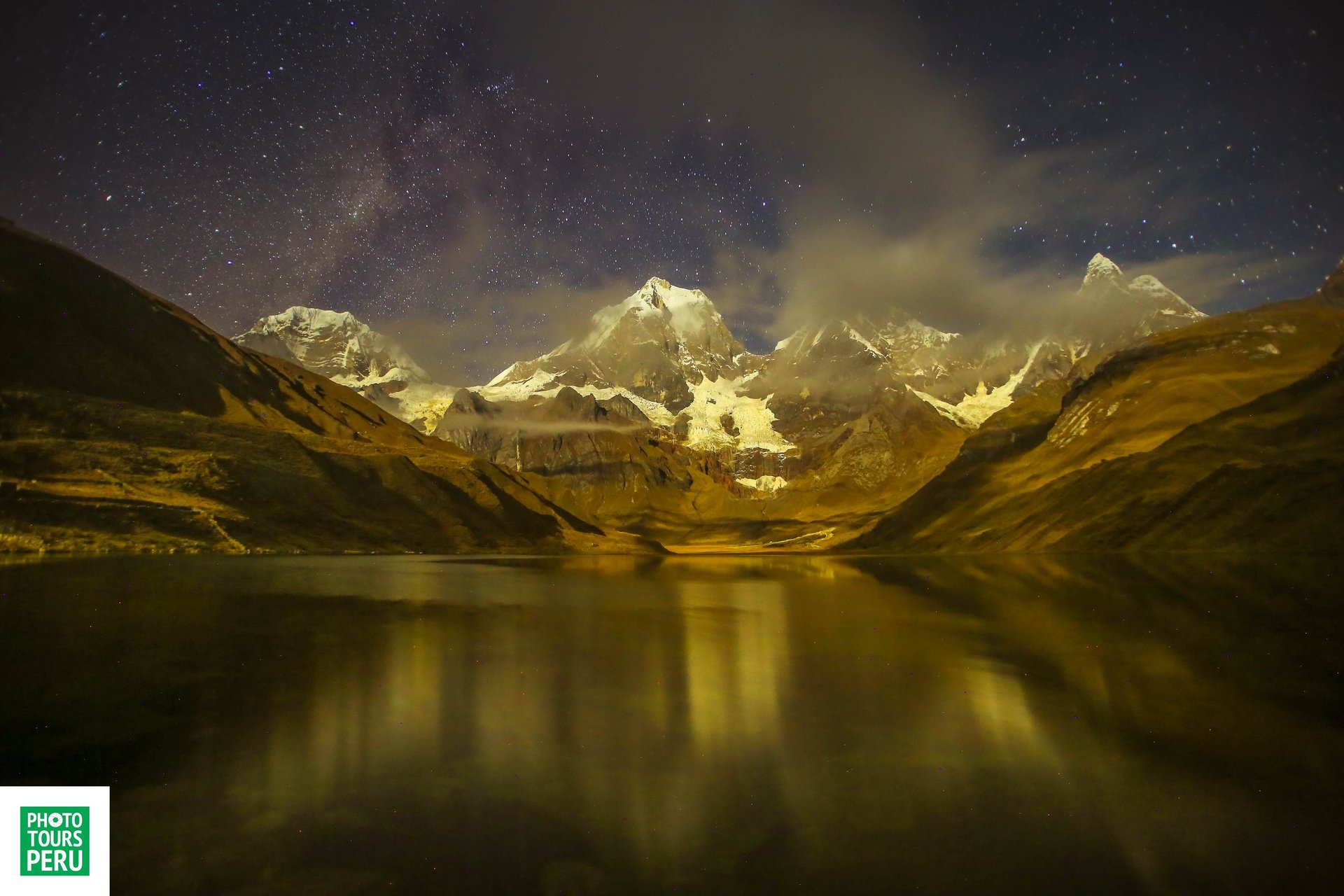
Photograph the spectacular Cordillera Huayhuash on an 8-day landscape photography and astrophotography expedition in the Peruvian Andes. Capture glacial peaks, turquoise alpine lakes, dramatic mountain reflections, golden-hour light, blue-hour landscapes, and the Milky Way beneath remote Andean skies.
Designed for landscape photographers, astrophotographers, and outdoor photography enthusiasts, this expedition combines high-altitude trekking with dedicated time for photography. Instead of simply hiking from one campsite to another, the itinerary prioritizes carefully selected viewpoints, changing natural light, and opportunities to create compelling images throughout the journey.
Explore the extraordinary mountain scenery around Laguna Carhuacocha and Laguna Jahuacocha, with potential views of Yerupajá, Jirishanca, and Siula Grande. Depending on the confirmed route, weather, season, and night-sky conditions, you may photograph the Milky Way, star trails, mountain silhouettes, alpine reflections, and dramatic Andean landscapes.
Whether you are building your landscape photography portfolio or improving your night-sky photography skills, this Huayhuash photography trek offers an opportunity to practice your craft in one of Peru's most impressive mountain environments.
Duration: 8 days / 7 nights
Destination: Cordillera Huayhuash, Ancash, Peru
Starting and ending point: Huaraz, subject to the confirmed itinerary
Tour style: Photography-focused trekking expedition
Photography focus: Landscape photography, Milky Way photography, star trails, long exposures, and mountain nightscapes
Accommodation: Mountain campsites, with any additional lodging specified in the final itinerary
Physical difficulty: Challenging high-altitude trek
Group size: Maximum 8 photographers for scheduled small-group departures; private departures available subject to confirmation
Why Choose Our Huayhuash Photography Trek?
Landscape Photography in the Cordillera Huayhuash
The Cordillera Huayhuash is renowned for its dramatic mountain scenery, glacial lakes, rugged ridgelines, and remote alpine valleys. These environments offer a wide range of compositions, from expansive panoramas to intimate landscape details.
Work with foreground elements, leading lines, mountain layers, reflections, and changing cloud formations to create more compelling photographs.
Dedicated Milky Way and Astrophotography Opportunities
When weather, moonlight, and seasonal visibility permit, remote mountain camps offer opportunities to photograph the Milky Way above the Andean peaks.
Practice night-sky focusing, exposure control, foreground composition, star trails, and wide-angle nightscape photography. Actual results depend on sky conditions and the timing of your departure.
Sunrise, Sunset, and Blue-Hour Photography
The changing light of the Andes creates opportunities throughout the day. Early morning can reveal cool blue-hour tones and the first sunlight touching the peaks. Sunset can bring warm highlights to glaciers, mountain ridges, and alpine lakes.
The photography schedule is designed to make productive use of available light while respecting the physical demands of high-altitude trekking.
Small-Group Photography Experience
Scheduled group departures are limited to a maximum of eight photographers, subject to availability. A smaller group can make it easier to discuss compositions, manage equipment, and organize photography sessions in the field.
Private departures can be quoted separately for photographers who prefer a personalized schedule.
Photography Highlights
Landscape photography of the Cordillera Huayhuash.
Turquoise alpine lakes and mountain reflections.
Yerupajá, Jirishanca, and Siula Grande viewpoints, depending on the confirmed route.
Sunrise and sunset photography.
Golden-hour and blue-hour mountain landscapes.
Milky Way landscape photography when conditions allow.
Star trails and long-exposure nightscapes.
Foreground, middle-ground, and background composition techniques.
Photography of Andean pastoral landscapes and local life where appropriate.
Practical guidance for working with rapidly changing mountain weather.
8-Day Huayhuash Landscape Photography Itinerary
Day 1: Huaraz – Huallanca Region – Queropalca
Meet your team in Huaraz and travel toward the Huayhuash region by private vehicle. The journey crosses highland landscapes and remote Andean communities, with photography stops where time, road conditions, and local access permit.
Use the drive to begin photographing the changing scenery, mountain textures, traditional settlements, and wide-open Andean landscapes.
After arrival, prepare your equipment for the trek, review the route and weather forecast, and organize your camera gear for the following days.
Photography focus: Andean landscapes, mountain scenery, village life where appropriate, and environmental compositions.
Overnight: Campsite at Queropalca area.
Meals: As specified in the final confirmed itinerary.
Day 2: Queropalca – Laguna Carhuacocha
After breakfast, begin the trek toward Laguna Carhuacocha, one of the region's most striking alpine lake environments.
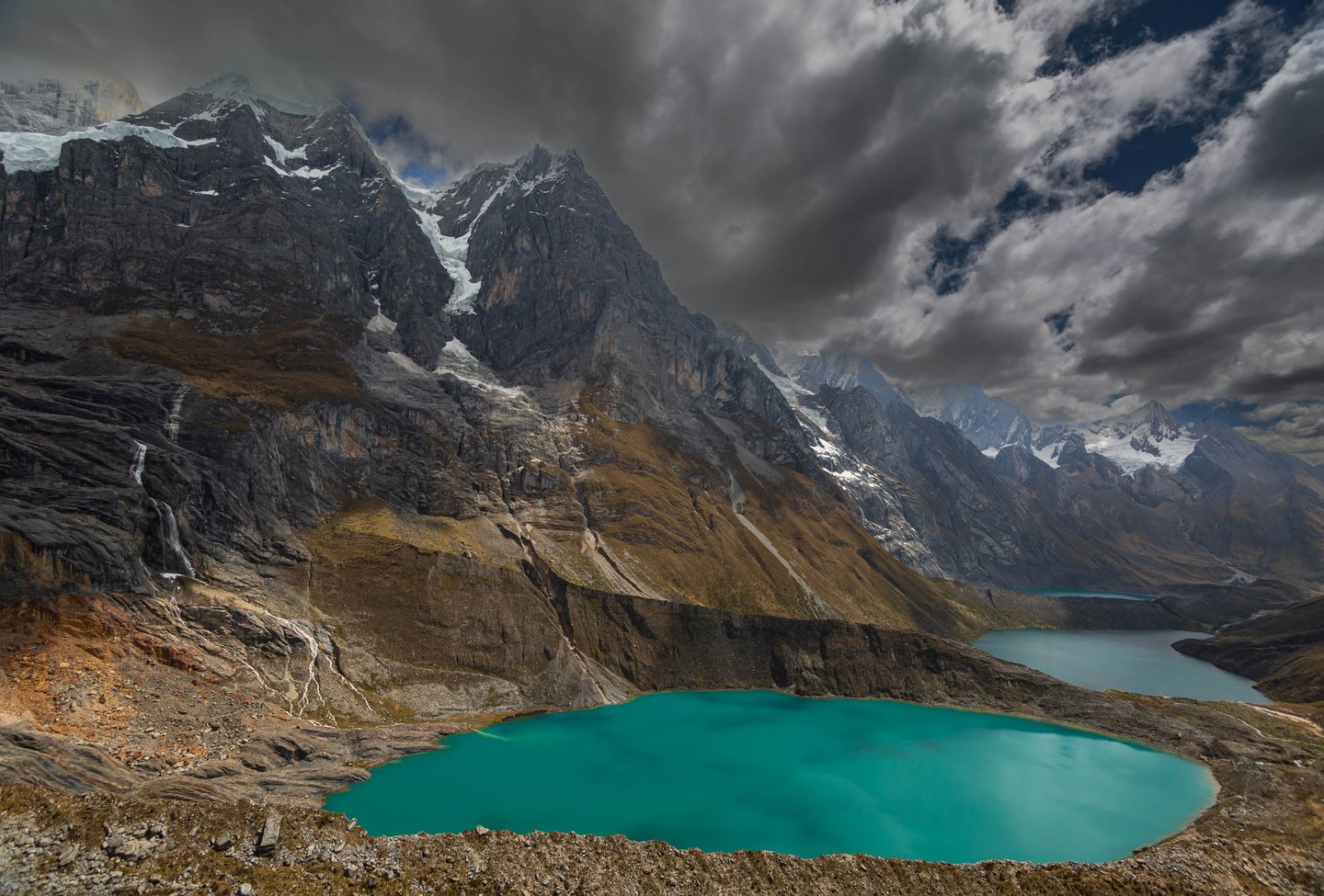
The surrounding landscape offers opportunities to photograph turquoise water, rugged mountain walls, glacial peaks, and changing reflections. Look for foreground elements along the lakeshore and use the mountain layers to establish depth and scale.
If conditions permit, organize a sunset or blue-hour photography session near camp. Night photography may be possible if skies are clear and the group is adequately prepared for cold temperatures and high altitude.
Photography focus: Alpine lake photography, mountain reflections, foreground composition, and sunset landscapes.
Overnight: Designated campsite near Laguna Carhuacocha.
Meals: Breakfast, lunch, and dinner, according to the final operating plan.
Day 3: Laguna Carhuacocha – Full Photography Day
Spend an additional day exploring suitable photography locations around Laguna Carhuacocha, subject to campsite permissions, local conditions, and the confirmed route.
An additional night in a productive landscape location allows more time to work with changing weather, explore alternative compositions, and revisit scenes under different light.
The day's sessions may include sunrise photography, lakeshore compositions, close-up landscape details, long exposures, and nightscape photography.
After dark, photographers can work on Milky Way compositions and star trails if the moon phase, season, weather, and visibility are suitable.
Photography focus: Sunrise, blue hour, alpine reflections, detailed landscapes, and astrophotography.
Overnight: Designated campsite near Laguna Carhuacocha.
Meals: Breakfast, lunch, and dinner.
Day 4: Laguna Carhuacocha – Carhuac Pass – Janca Valley
Continue through the mountain landscape toward the designated camp in the Janca Valley, following the route confirmed by your local trekking team.
The ascent and descent offer opportunities to photograph changing mountain perspectives, high-altitude pastures, rocky terrain, and broad Andean valleys.
Take advantage of natural leading lines and atmospheric conditions to create landscape images that communicate the scale and remoteness of Huayhuash.
After arrival at camp, review the available viewpoints and prepare for an optional evening photography session, depending on fatigue, weather, and safety conditions.
Photography focus: Mountain passes, layered landscapes, valley compositions, and changing light.
Overnight: Designated campsite in the Janca Valley.
Meals: Breakfast, lunch, and dinner.
Day 5: Janca Valley – Cacananpunta Pass Area
Continue trekking through the high mountain environment toward the next confirmed campsite.
This stage focuses on rugged Andean scenery, glacial landforms, mountain ridgelines, and expansive views. Use the terrain to experiment with wide-angle compositions as well as tighter compositions that emphasize the geometry of the peaks.
At camp, prepare your camera equipment for cold-weather photography. If conditions allow, work on night-sky compositions using the surrounding landscape as a foreground element.
Photography focus: High-altitude landscape photography, mountain textures, dramatic skies, and nightscapes when conditions permit.
Overnight: Camping.
Meals: Breakfast, lunch, and dinner.
Day 6: High Mountain Route – Laguna Jahuacocha
Follow the confirmed trekking route toward Laguna Jahuacocha, a spectacular alpine lake surrounded by the mountains of the Huayhuash range.
Depending on the exact route, trail conditions, and timing, this day may offer opportunities to photograph mountain passes, glacial valleys, streams, and changing views of the surrounding peaks.
At Jahuacocha, explore suitable lakeshore viewpoints and prepare compositions for sunset, blue hour, and possible night photography.
Photography focus: Mountain landscapes, alpine lake compositions, reflections, and night-sky photography when conditions permit.
Overnight: Designated campsite near Laguna Jahuacocha.
Meals: Breakfast, lunch, and dinner.
Day 7: Laguna Jahuacocha – Landscape and Nightscape Photography
Use the available time around Laguna Jahuacocha for dedicated photography, subject to the final trekking schedule.
Early morning may offer soft light across the surrounding peaks, while changing cloud conditions can create opportunities for dramatic landscape photography.
During the day, explore accessible viewpoints and work on panoramic compositions, mountain reflections, foreground details, and long exposures.
If the departure schedule and weather permit, a final nightscape session may provide opportunities to photograph stars above the mountain skyline.
Photography focus: Sunrise landscapes, reflections, panoramic compositions, and astrophotography where conditions allow.
Overnight: Designated campsite near Laguna Jahuacocha.
Meals: Breakfast, lunch, and dinner.
Day 8: Laguna Jahuacocha – Pampa Llamac – Llamac – Huaraz
After breakfast, begin the final trekking stage toward Llamac via the confirmed route and designated pass.
As the trek concludes, take final photographs of the mountain scenery and changing Andean landscapes where safe stops are possible.
Meet your private vehicle in the agreed location and return to Huaraz. Arrival time depends on trail conditions, group pace, and road conditions.
Photography focus: Final mountain panoramas, environmental images, and closing landscape photographs.
Meals: Breakfast and lunch, with dinner dependent on the arrival time and final arrangements.
End of expedition: Huaraz.
Important itinerary note: The exact camp sequence, pass names, elevations, trekking times, and meals must be confirmed by the local operations team before this itinerary is published as a guaranteed schedule.
What Will You Learn During the Photography Expedition?
Landscape Photography Techniques
Learn how to build stronger compositions by using foreground elements, leading lines, mountain layers, and natural frames. Explore focal length selection, depth, visual balance, and techniques for working with changing light.
Milky Way and Nightscape Photography
Practice manual focusing, exposure decisions, white balance, and wide-angle composition for night landscapes. Learn how to balance the sky with mountain foregrounds and plan photography around moonlight and available darkness.
Long Exposures and Panoramic Photography
Explore long exposures for clouds and water where suitable, as well as panoramic techniques for capturing expansive Andean scenery. Advanced techniques such as focus stacking or exposure blending can be discussed according to conditions and participants' experience.
Photography instruction is delivered in the field and depends on the services specified in your confirmed tour package.
What's Included in the Huayhuash Photography Trek?
Included Services
The following services should be listed as included only after they are confirmed in the final quotation:
Eight-day trekking itinerary from Huaraz and return.
Private or scheduled group transportation as specified in the selected package.
Professional photographer-guide or photography instructor, according to the confirmed service.
Local trekking guide and support crew, as specified in the package.
Camping equipment and designated campsites.
Pack animals and handlers for shared trekking equipment and personal luggage, within the agreed weight allowance.
Breakfast, lunch, and dinner on scheduled trekking days, as specified in the final meal plan.
Drinking water or water treatment arrangements, as explicitly stated in the quotation.
Applicable route or community fees included in the agreed price.
Photography discussions and field guidance according to the selected package.
Emergency and first-aid arrangements specified in the operating plan.
Not Included
Unless expressly included in your quotation, the following are not included:
Flights to or from Peru.
Accommodation in Huaraz before or after the trek.
Meals not specified in the final itinerary.
Personal travel insurance and high-altitude trekking coverage.
Emergency evacuation expenses beyond the services explicitly provided.
Personal camera equipment, lenses, tripods, memory cards, and accessories.
Sleeping bag and personal trekking equipment unless specified as provided.
Personal porter services beyond the agreed baggage allowance.
Tips for guides, drivers, and trekking crew.
Alcoholic beverages, snacks, and personal purchases.
Additional accommodation, transport, or services caused by changes outside the agreed itinerary.
Any permits or fees not explicitly included in the final quotation.
Pricing for the Huayhuash Photography Trek
The tour is available as a scheduled small-group departure or a private photography expedition, subject to availability.
Your final price depends on the number of travelers, guide arrangements, transportation, camping equipment, support crew, meals, and any additional photography services.
Request a personalized quotation for your preferred dates. We will confirm the itinerary, inclusions, accommodation arrangements, and final price before requesting a deposit.
Best Time for Huayhuash Landscape and Astrophotography
The Andean dry season is generally a useful period to consider for trekking and landscape photography in the Cordillera Huayhuash, but weather conditions remain variable at high altitude.
For astrophotography, the best dates depend on the Milky Way's seasonal position, moon phase, twilight times, cloud cover, and the planned location of each night session.
We recommend choosing travel dates around your photographic goals rather than promising clear skies or guaranteed Milky Way visibility.
Recommended Camera Equipment
Cameras and Lenses
DSLR or mirrorless camera.
Wide-angle lens for mountain landscapes and night skies.
Standard zoom for versatile landscape compositions.
Telephoto lens for compressed mountain scenes and distant details.
Sturdy tripod.
Spare batteries and memory cards.
Remote shutter release or intervalometer.
Headlamp with red-light mode.
Weather protection and a camera bag suitable for trekking.
High-Altitude Preparation
This is a physically demanding expedition involving high mountain passes, cold nights, uneven terrain, and extended trekking days.
Allow time to acclimatize before starting the trek, maintain hydration, and discuss any relevant health or mobility concerns with a qualified medical professional before traveling. Participants should have appropriate hiking fitness and be comfortable carrying personal camera equipment.
Frequently Asked Questions
Is this tour suitable for beginner photographers?
Yes, the photography instruction can accommodate beginners and experienced photographers, provided participants are prepared for the physical demands of the trek. The high-altitude trekking difficulty should not be confused with the technical difficulty of photography.
Will I photograph the Milky Way every night?
No. The Milky Way is visible only when its position, the moon phase, darkness, weather, and local horizon conditions are suitable. Cloud cover and changing mountain weather can prevent night photography.
Is this a private photography tour?
Private departures can be requested. Scheduled group departures operate under their published group-size and departure conditions. The quotation must clearly state which option you are booking.
Are all meals included?
The confirmed package should specify which breakfasts, lunches, and dinners are included each day. Meals in Huaraz before or after the trek are excluded unless stated otherwise.
How difficult is the trek?
The expedition involves high-altitude trekking, significant elevation changes, uneven terrain, and cold conditions. It is best suited to travelers with appropriate fitness and preparation.
How do I book?
Contact Photo Tours Peru with your preferred travel dates, number of travelers, photography experience, and whether you prefer a private departure or a scheduled small group. We will confirm availability and provide a detailed quotation.
Book Your Huayhuash Photography Expedition
Create stronger landscape and night-sky photographs in the spectacular Cordillera Huayhuash.
Join Photo Tours Peru for an eight-day photography-focused trek featuring alpine lakes, dramatic Andean peaks, changing mountain light, and opportunities for Milky Way photography when conditions permit.
Request your Huayhuash photography trek itinerary and personalized quotation today.
Huayhuash Photography Trek — tarifas de referencia
Price per person:2026
1.- Person $2,750
2.- People $2,400
3.-People $2,250
4.- People $1,850
5.-People $1,750
6.- People $1,650
7.- People $1,650
8.- People $1,550
Huayhuash Landscape & Astrophotography Trek 8-Day Photography Expedition
Contact
Email: phototourperu@gmail.com
Phone: +51 940188346
© 2025. All rights reserved.
Designed by Zihna