
Chonta Canyon Condor Photography Guide | Photo Tours Peru
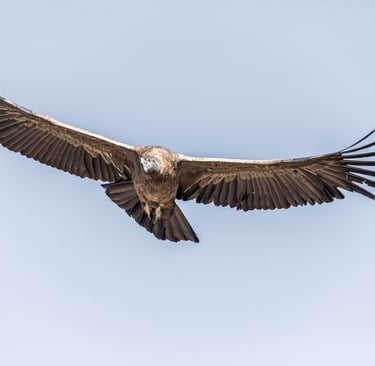
A dark silhouette appears above the canyon. As it approaches, broad wings and separated flight feathers become visible against the mountains. For a few seconds, the bird, the light, and the landscape align.
Photo tours peru
11/17/20267 min read
Andean Condor Photography at Chonta Canyon: What Photographers Should Know
A dark silhouette appears above the canyon. As it approaches, broad wings and separated flight feathers become visible against the mountains. For a few seconds, the bird, the light, and the landscape align.
Andean condor photography at Chonta Canyon combines birds in flight with the scale of Peru’s mountain scenery. The experience rewards preparation and patience: you need enough time at the viewpoint, a manageable camera setup, and realistic expectations about wild birds.
This guide explains where Chonta is, what the journey involves, how to plan your photography session, and which camera techniques can help.
Where is Chonta Canyon?
The Chonta condor viewpoints are near the community of Chonta in the district of Limatambo, province of Anta, Cusco. They overlook the Apurímac Canyon landscape.
Published PROMPERÚ visitor guidance places the destination approximately 98 kilometres from Cusco, followed by a walk of about 3.2 kilometres to the viewpoint. Treat these figures as planning estimates: the vehicle endpoint, selected viewpoint, road conditions, and your pace affect the actual journey.
Chonta is a separate destination from Colca Canyon near Arequipa. If you are staying in Cusco, it is a location to consider for condor photography without adding an Arequipa-based itinerary.
Why photograph Andean condors at Chonta?
The main attraction is the relationship between the bird and the canyon.
A close view can reveal wing shape and plumage detail. A more distant bird can show the scale of the landscape, especially when framed against layered mountains or a dramatic section of the valley.
SERFOR has identified Chonta as a location with potential for condor observation, recording birds of different ages and sexes during its assessment. This supports the destination’s interest for wildlife watching, but it does not establish a guaranteed number of birds for visitors.
Plan for a wildlife encounter, not a scheduled performance. A condor may pass close, remain distant, or not appear during your session.
What photographers should know before booking
Topic Planning advice Starting point Most visitors organize the journey from Cusco Access Road travel followed by a walk Walking distance Plan around approximately 3 kilometres each way; confirm the selected viewpoint ElevationThis is a high-Andean outing, with viewpoints around 3,400 metresTime at the view point Allow a substantial observation sessionFlight photography Bring a lens you can track comfortably Sightings Bird numbers, distance, and visibility varyReturnConfirm walking time, daylight, and the drive back before departure
Do not judge the outing only by the distance of the walk. Uneven ground, elevation, sun, wind, and camera weight all affect how demanding it feels.
Best time of day for condor photography at Chonta
Local visitor information commonly emphasizes late morning and afternoon viewing, while Photo Tours Peru’s Chonta program schedules its condor photography session in the afternoon.
The reason to allow flexibility is that condors use rising air and wind to support soaring. Weather influences where and how birds move.
Ask your guide to plan around recent local observations, the forecast, and the time needed to reach the viewpoint.
Afternoon activity and photographic light
An afternoon session can provide opportunities to photograph birds against the canyon, but good activity and beautiful light do not always occur together.
Bright conditions may produce stronger contrast or atmospheric shimmer over distant ground. Softer light may improve the appearance of plumage, but it cannot guarantee that a bird will fly through your preferred composition.
Why sunset is not a guarantee
Golden light is attractive, but do not make sunset the only goal. Birds may appear earlier, clouds may cover the light, and the return walk still needs to be considered.
Choose a schedule that balances observation time, photographic opportunities, and a sensible return.
Best season for Chonta condor photography
For an initial plan, the Cusco region’s relatively drier period—broadly May to October—is a useful starting point. Transition months vary, and conditions should be checked for your dates.
This is weather guidance, not a claim that condors are present only during those months.
Drier months
Drier conditions can make outdoor sessions and access more straightforward. However, clear skies may create hard shadows, bright backgrounds, and haze.
Wetter months
Clouds can add atmosphere to the canyon, and softer light can suit environmental images. Rain, low cloud, and poor visibility may interrupt photography or affect access.
Choose dates with enough flexibility for weather, particularly if this is a priority subject.
What is the walk to the viewpoint like?
Expect a mountain path rather than a viewpoint reached directly by vehicle. Published visitor information describes roughly an hour of walking, while photography stops and individual pace can make the approach longer.
Carry only the equipment you can manage comfortably for the complete outing. Discuss mobility concerns before booking, and avoid assuming a high-elevation walk will feel the same as a similar distance at home.
Best lenses for condor photography
A telephoto zoom is a practical choice because bird distance changes.
A lens reaching approximately 400–600 mm can help with more distant flight views. A shorter telephoto may be useful when a bird passes closer or when you want to include more canyon.
These are options, not minimum requirements. A familiar lens you can track steadily is often more useful than a heavier setup that becomes difficult to hold.
Bring a wider lens if landscapes are an important part of your visit.
Do you need the longest lens available?
Not necessarily. A very narrow field of view can make it harder to find a moving bird and keep both wings inside the frame.
Start wider while acquiring the subject, then tighten the composition if time and distance allow.
Tripod, monopod, or handheld?
Choose support around your equipment and experience.
A suitable head can help with a heavy lens, but an unfamiliar tripod setup may restrict your tracking. A lighter handheld system can offer flexibility during a brief pass.
Test your setup before the trip and keep all equipment within safe viewing areas.
Camera settings for Andean condors in flight
Use these as starting points to test, not fixed settings.
Setting Suggested starting approach Shutter speed Around 1/1600–1/2500 second for flight ApertureOften f/5.6–f/8 when light and lens permit ISO Auto ISO or an ISO sufficient to maintain your shutter speed Autofocus Continuous autofocus with a suitable tracking area Drive mode Short bursts during useful positionsFile format RAW for processing flexibility
A gliding bird may require different settings from one turning rapidly or flapping. Review actual sharpness and adjust.
Keep the eye and head sharp
Bird detection can help, but do not depend on it without practice. Learn how to switch focus areas when the camera selects the canyon instead.
Track smoothly and leave room around the wings. A banked turn may create a stronger photograph than a flat silhouette directly overhead.
Expose for the bird as the background changes
A condor can move from bright sky to a shaded cliff in seconds.
Against bright sky, automatic metering may leave the bird too dark. Exposure compensation can help, but review the result and protect pale feather detail.
When the bird is in consistent light, manual exposure can help prevent changing backgrounds from shifting the exposure unnecessarily.
Watch for atmospheric shimmer
A distant bird may appear soft even when focus and shutter speed are correct. Warm air and the long viewing distance can reduce detail.
Avoid assuming that a larger crop or stronger sharpening will solve the problem. Wait for a different distance or use a wider composition that works with the scene.
Five compositions to try at Chonta
1. The wingspan portrait
Leave space around both wings. Watch for a moment that reveals the head rather than only the underside.
2. The banking turn
A turn can reveal wing structure and create a more dynamic shape. Track through it with a short burst.
3. The bird above the canyon
Use a wider frame to show the relationship between wildlife and landscape.
4. The silhouette
A clean silhouette can work when the sky provides separation. Look for a recognizable wing shape rather than an indistinct dark mark.
5. The layered landscape
A smaller bird against mountain layers can communicate scale. Make sure the subject remains visible enough to contribute to the image.
What to pack
Bring water, food as arranged, sun protection, layers, rain protection, and footwear appropriate for uneven ground.
For photography, pack spare batteries, memory cards, lens cloths, and equipment protection. Binoculars can help you observe without continually lifting a long lens.
If the agreed schedule may involve low light on the return, confirm the plan and bring an appropriate light. Do not extend your session independently beyond the planned departure.
Responsible condor photography
Stay within permitted areas and follow community and guide instructions.
Do not approach cliff edges, nests, roosts, or perched birds to obtain a closer frame. Never use food or carcasses to attract condors for a photograph.
Avoid drone use around birds or sensitive cliffs, and follow applicable site rules. Do not publish precise locations of sensitive nesting or roosting sites.
Support local access arrangements and ask permission before photographing community members.
Chonta or Colca Canyon?
Both can be considered for an Andean condor photography itinerary, but they involve different travel plans.
For travelers already exploring Cusco, Chonta fits the region’s geography. Colca is normally planned as part of an Arequipa-based journey.
Choose according to your wider route, available days, and photographic goals. Neither location guarantees a particular number of birds, distance, or light.
Frequently asked questions
Can I visit Chonta as a day trip from Cusco?
Yes, it is commonly organized as a full-day outing. Allow for the road journey, return walk, and enough observation time. Confirm departure and return expectations before booking.
Are condor sightings guaranteed?
No. These are wild birds, and their movements and visibility vary.
Is Chonta suitable for beginner photographers?
Yes, if the walking requirements suit you. Practice finding and tracking birds in flight before the visit, and start with a wider frame.
Is the walk difficult?
Difficulty depends on fitness, elevation, weather, trail conditions, and equipment weight. Discuss the route and your needs before choosing the trip.
Can I combine condors with landscape photography?
Yes. The canyon itself offers landscape possibilities, making it worthwhile to plan both close wildlife views and environmental compositions.
Can I combine Chonta with astrophotography?
Photo Tours Peru publishes a three-day program combining Chonta condor photography, stargazing, and Humantay Lake. Night photography depends on weather, astronomical conditions, and the confirmed itinerary.
Plan your Chonta photography experience with Photo Tours Peru
Tell us your dates, group size, camera equipment, walking preferences, and whether you prioritize flight portraits, wider landscapes, or a longer photography journey.
Explore our Humantay Lake, Andean Condors and Stargazing Photography Tour — 3 Days.
For a broader bird photography journey including Chonta, explore our Private Andes and Manu Road Bird Photography Tour — 13 Days.
Contact Photo Tours Peru to discuss a route with dedicated time for condors, canyon landscapes, and changing Andean light.



Contact
Email: phototourperu@gmail.com
Phone: +51 940188346
© 2025. All rights reserved.
Designed by Zihna