
Best Dates for Astrophotography at Ausangate 2026
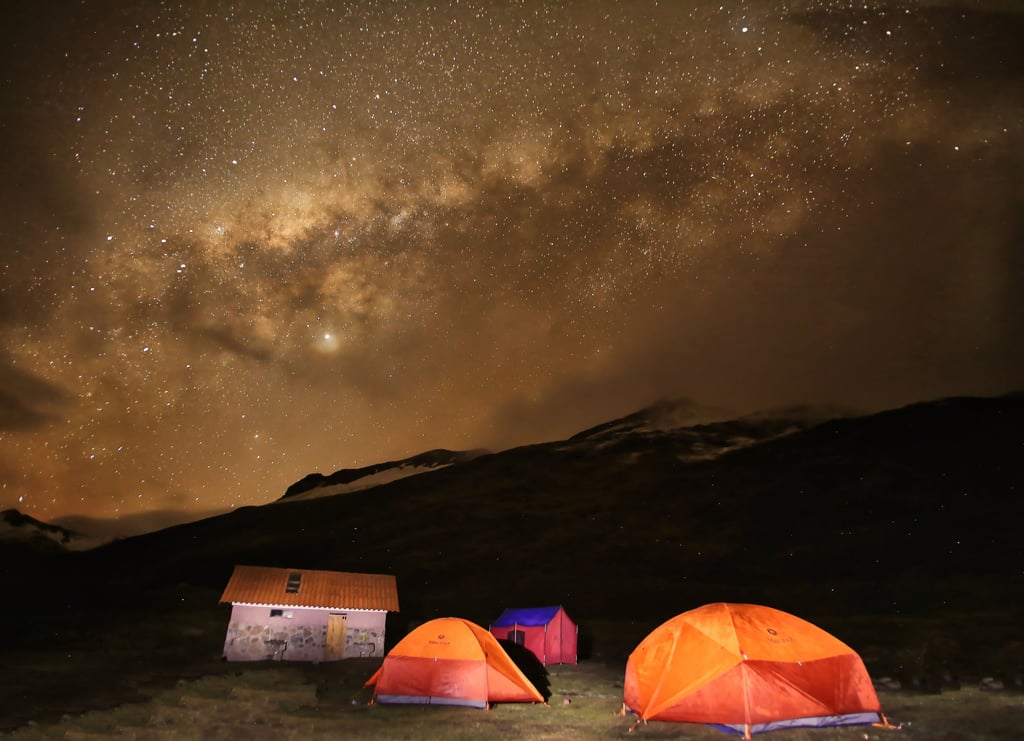
Capture spectacular nightscapes and the Milky Way above the snow-capped Ausangate Mountain — one of the most impressive astrophotography destinations in the Peruvian Andes.
By photo tours peru
1/13/20268 min read
Best Dates for Astrophotography at Ausangate 2027
Best Time for Astrophotography at Ausangate in 2027: Milky Way, New Moon Dates & Photography Tips
Discover the best season and lunar windows for photographing the Milky Way, star trails and dramatic Andean nightscapes at Ausangate, Peru.
The Ausangate region, southeast of Cusco in Peru's Cordillera Vilcanota, offers an extraordinary setting for landscape and astrophotography. Snow-covered peaks, remote alpine lakes, rugged mountain ridges and high-altitude terrain create powerful foregrounds for night-sky photography.
For photographers planning an Ausangate astrophotography tour in 2027, choosing the right dates involves more than checking the weather. You need to consider the lunar calendar, Milky Way visibility, astronomical darkness, seasonal conditions, altitude and the direction in which you want to compose your images.
This guide explains when to plan your trip, how to choose a dark-sky window and what to consider before joining a photography expedition in the Peruvian Andes.
Why Photograph the Night Sky at Ausangate?
Ausangate is known for its dramatic Andean scenery and remote mountain environment. Its combination of glacial peaks, alpine lakes and expansive horizons makes it particularly interesting for photographers who want to combine night skies with recognizable landscape features.
Depending on location and conditions, photographic opportunities may include:
Milky Way compositions above snow-covered Andean peaks.
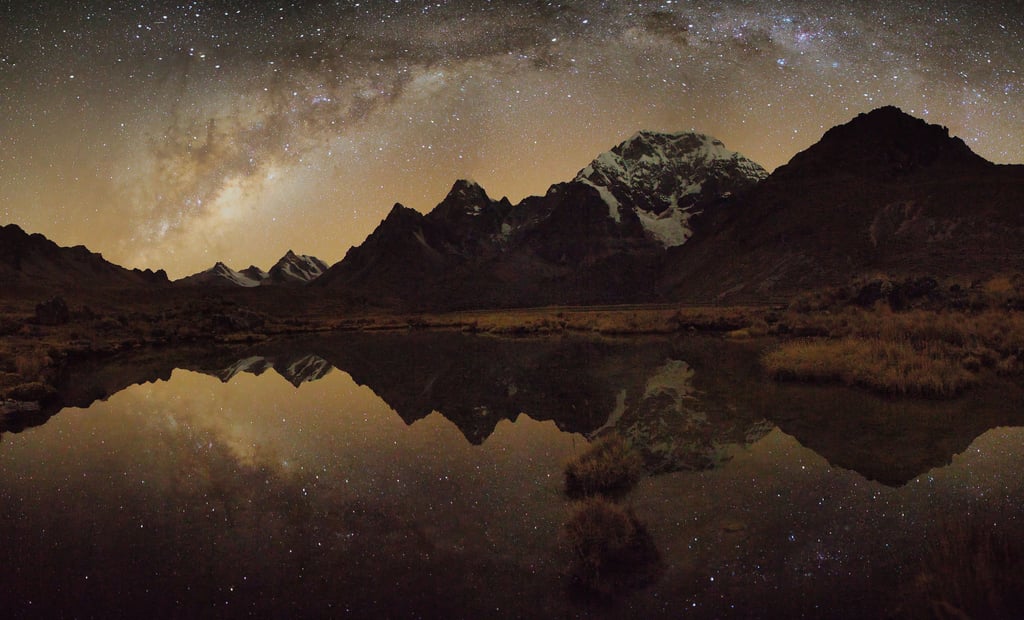
Nightscapes featuring alpine lakes and mountain silhouettes.
Star trails over remote highland landscapes.
Blue-hour transitions and the first light of sunrise.
Moonlit mountain scenes and illuminated foregrounds.
Zodiacal light photography during favorable seasonal and astronomical windows.
The best results depend on clear skies, suitable lunar conditions, safe access and the alignment between the sky and your chosen foreground. No destination can guarantee clear weather or a particular celestial composition.
Best Season for Astrophotography at Ausangate in 2027
The generally drier period in the Ausangate region runs approximately from May through September. April and October can also offer photographic opportunities, although weather conditions become more variable around the seasonal transitions.
April: Changing Landscapes and Dark-Sky Opportunities
April can offer a transition between the wetter months and the drier Andean season. Photographers may encounter dramatic clouds, fresh mountain scenery and opportunities for landscape photography alongside night-sky sessions.
Best approach: Allow flexibility in your schedule and prioritize multiple potential shooting locations.
May: The Start of the Drier Season
May is a promising month for photographers seeking a combination of clearer weather, mountain landscapes and Milky Way compositions.
Best approach: Plan around a dark-moon window and allow enough time for sunset, night photography and sunrise.
June and July: Prime Winter Landscape Conditions
June and July are often attractive months for high-Andean landscape photography because they fall within the drier season. Cold nights and rapidly changing mountain conditions remain important considerations.
The Milky Way's appearance changes throughout the night and across the season, so the ideal shooting time depends on the specific date, location, direction of view and desired composition.
Best approach: Use an astronomy planning app to identify the Galactic Core's altitude, azimuth and visibility during your intended shooting window.
August and September: Continued Dark-Sky Opportunities
August and September can provide additional opportunities for Milky Way photography, star trails and mountain nightscapes. September also approaches the transition toward wetter conditions in the Andes.
Best approach: Compare lunar conditions with the position of the Milky Way and keep a flexible backup plan for cloudy nights.
October: A Flexible Shoulder-Season Option
October can still offer excellent photographic moments, but increasing weather variability may affect visibility and access.
Best approach: Consider a longer photography itinerary rather than relying on a single night.
New Moon Dates for Ausangate Astrophotography in 2027
New moon periods are useful starting points for planning Milky Way photography because moonlight is minimal around the new moon. However, the best dates also depend on the Galactic Core's visibility, astronomical darkness, weather and your intended foreground composition.
The following dates are the published new moon dates in Peru for 2027:
MonthNew moon dateAprilApril 6, 2027MayMay 6, 2027JuneJune 4, 2027JulyJuly 3, 2027AugustAugust 2 and August 31, 2027SeptemberSeptember 29, 2027OctoberOctober 29, 2027NovemberNovember 27, 2027DecemberDecember 27, 2027
These dates are planning references, not guaranteed best departure dates. A new moon does not automatically mean that the Milky Way will be visible at the right time or in the desired position.
Before confirming your photography trip, check the lunar phase and moonrise and moonset times for the exact location, then verify the Galactic Core's visibility and astronomical twilight for each night.
How to Choose the Best Dates for Milky Way Photography
For a successful Ausangate astrophotography expedition, evaluate four factors together.
1. Lunar Phase
A new moon or a nearby moonless period generally provides the darkest sky for photographing faint stars and Milky Way structure.
Bright moonlight can still be useful when you want to illuminate mountain foregrounds, but it reduces the contrast of faint celestial features.
2. Galactic Core Visibility
The Milky Way is not fixed in one position. Its Galactic Core rises and sets at different times and appears in different parts of the sky throughout the year.
Use PhotoPills, Stellarium or a comparable astronomy planning tool to check the Milky Way's position at your intended location and time.
3. Weather and Cloud Cover
The dry season generally offers more favorable conditions than the wetter months, but high-altitude weather can change quickly.
Allow more than one night whenever possible. Flexible scheduling gives you additional opportunities to respond to clouds, wind and changing visibility.
4. Foreground Composition
A strong nightscape combines the sky with an interesting foreground. At Ausangate, this may include a glacial peak, an alpine lake, a mountain ridge or a carefully selected campsite view.
Scout the location during daylight and identify safe tripod positions before darkness falls.
Photography Locations and Composition Ideas
Ausangate and Its Alpine Lakes
Use mountain silhouettes and lake reflections to create depth in wide-angle nightscapes. Reflections depend on wind, water conditions and the position of the stars.
Rainbow Mountain and Vinicunca
The colorful mineral formations around Vinicunca offer distinctive foreground textures. Any night photography plan must account for safe access, local regulations, weather and the time required to reach the shooting location.
High-Andean Mountain Landscapes
Remote valleys and mountain ridges can provide clean horizons and opportunities for star trails, panoramic compositions and environmental night photography.
Your final shooting locations should be selected according to the actual route, safe access and conditions during the expedition.
Recommended Camera Settings for Milky Way Photography
Use these starting points and adjust according to your lens, camera sensor, focal length, sky brightness and desired result.
Camera mode: Manual.
File format: RAW.
Lens: A fast wide-angle lens is a useful starting point.
Aperture: Begin around f/1.8–f/2.8 if your lens permits.
Shutter speed: Start around 5–15 seconds and inspect star sharpness.
ISO: Try ISO 1600–6400 as a starting range, depending on your camera and exposure.
Focus: Focus manually on a bright star or distant light, then verify sharpness using magnified live view.
Tripod: Use a stable tripod and a remote release or timer.
White balance: Choose a consistent setting for your RAW workflow.
These are starting points, not universal settings. Longer exposures can produce star trailing, and the correct shutter speed depends on focal length, sensor resolution and the direction of the camera.
For star trails, use a series of exposures or another technique suited to your camera and the composition you want to create.
Suggested Six-Day Ausangate Astrophotography Itinerary
A six-day photography expedition provides more flexibility than a short overnight trip. The following is a proposed itinerary framework; exact camps, walking times, accommodation and access arrangements must be confirmed before publication or booking.
Day 1: Cusco to Pacchanta — Acclimatization and Landscape Scouting
Travel from Cusco toward the Ausangate region. Take time to adjust to the altitude, explore the surroundings and identify potential compositions for sunset and the following morning.
Photography focus: Mountain landscapes, local life, environmental details and sunset light.
Day 2: Alpine Lakes and Nightscape Photography
Explore the selected alpine lake area with your guide. Scout foregrounds during daylight and prepare your equipment before the evening session.
Photography focus: Milky Way compositions, lake reflections when conditions permit and wide-angle nightscapes.
Day 3: Glacial Peaks and Changing Light
Work with the changing light around the mountain landscape. Use the day to explore different viewpoints and prepare alternative night-sky compositions.
Photography focus: Sunrise, mountain textures, panoramic landscapes and star trails if conditions allow.
Day 4: Rainbow Mountain and Andean Landscapes
Explore the selected Rainbow Mountain area according to the confirmed route and access conditions. Plan compositions around the terrain and available light.
Photography focus: Colorful geological formations, landscape details, sunset and twilight.
Day 5: Flexible Night-Sky Session
Reserve this day for a second night-sky opportunity or an alternative location. A flexible session allows the itinerary to respond to cloud cover and other conditions.
Photography focus: Milky Way alignment, long exposures, nightscape panoramas or moonlit landscapes depending on the actual sky conditions.
Day 6: Sunrise Photography and Return to Cusco
Photograph the first light of the day, pack equipment and return to Cusco according to the confirmed transport schedule.
Photography focus: Sunrise, final mountain compositions and a review of images captured during the expedition.
What Equipment Should You Bring?
For a high-altitude astrophotography expedition, consider packing:
A DSLR or mirrorless camera with manual exposure controls.
A fast wide-angle lens.
A sturdy tripod and remote shutter release.
Spare batteries and memory cards.
Headlamp with a red-light mode.
Warm gloves and layered clothing suitable for freezing nights.
Lens cloths and protection against wind, dust and condensation.
A power bank or suitable charging solution.
An astronomy planning app with offline access where possible.
Cold temperatures can reduce battery performance, so keep spare batteries warm and carry essential equipment in protective bags.
Altitude, Safety and Acclimatization
Ausangate is a high-altitude destination. Night photography may involve cold temperatures, uneven terrain, limited facilities and prolonged periods outdoors.
Spend time acclimatizing before undertaking strenuous activity at altitude. Follow your guide's instructions, stay hydrated and allow sufficient time to rest. If you develop symptoms of altitude illness, stop exertion and seek appropriate assistance.
The itinerary should be adapted to the group's experience, fitness, acclimatization and prevailing conditions. Never sacrifice safety for a photograph.
Join an Ausangate Astrophotography Tour in 2027
Photo Tours Peru organizes photography-focused expeditions for travelers interested in the Milky Way, high-Andean landscapes and night-sky photography.
Our Ausangate photography experience is designed around landscape scouting, changing light, night-sky planning and the photographic opportunities of the Peruvian Andes.
Interested in photographing Ausangate in 2027?
Contact Photo Tours Peru to discuss departure dates, the proposed itinerary, equipment requirements and the best available lunar window for your photography goals.
Explore our Ausangate Astrophotography Trek
Frequently Asked Questions
What is the best month for astrophotography at Ausangate?
May through September is a useful starting window because it overlaps with the drier season in the Andes. Actual results depend on clouds, lunar conditions and the Milky Way's position.
Is a new moon necessary for Milky Way photography?
No, but a new moon or a nearby moonless period generally makes it easier to capture faint Milky Way details. Moonlight can be useful for other types of landscape photography.
Can I photograph the Milky Way and Rainbow Mountain on the same trip?
Yes, an itinerary can combine these photographic objectives, provided that access, travel time, weather and the Milky Way's position are suitable for the planned locations.
Do I need professional photography experience?
No. A photography expedition can be suitable for dedicated enthusiasts as well as experienced photographers, provided that the physical requirements and altitude are appropriate for the participant.
Are clear skies guaranteed?
No. High-altitude weather is unpredictable. Planning multiple nights and having alternative locations improves flexibility but cannot guarantee a clear sky.
What should I check before booking an Ausangate astrophotography tour?
Confirm the itinerary, elevation, accommodation, included services, physical requirements, lunar window and the expected photographic opportunities. Ask how the operator handles weather-related changes and alternative shooting locations.
Final Tips
“Book our Ausangate Astrophotography Workshop 2026 — Capture the Milky Way over Peru’s highest peaks under crystal clear Andean skies. Limited spaces available in peak months like June, July & August!”
Contact
Email: phototourperu@gmail.com
Phone: +51 940188346
© 2025. All rights reserved.
Designed by Zihna