
Best Dates to Photograph the Zodiacal Light at Ausangate (2026)
The Zodiacal Light is a faint, pyramid-shaped glow caused by sunlight scattering off interplanetary dust, visible in the Andes night sky under dark conditions.
By Photo tours peru
1/13/20265 min read


Best Dates to Photograph the Zodiacal Light at Ausangate (2027)
Best Dates to Photograph the Zodiacal Light at Ausangate, Peru (2027 Guide)
A practical guide to zodiacal light photography, Milky Way season, lunar phases, and high-altitude nightscapes in the Peruvian Andes.
The Ausangate region, located in Peru's spectacular Cordillera Vilcanota near Cusco, offers landscape photographers and astrophotographers an extraordinary combination of remote mountain scenery, glacial lakes, colorful Andean terrain, and dark skies away from major urban centers.
For photographers planning an astrophotography trip to Peru in 2027, the key is to coordinate the seasonal visibility of the zodiacal light with moonlight, astronomical twilight, local weather, and a carefully chosen foreground.
This guide explains when to look for the zodiacal light at Ausangate, how to plan your photography sessions, and how to prepare for a high-altitude nightscape expedition.
What Is the Zodiacal Light?
The zodiacal light is a faint, diffuse glow created when sunlight scatters off interplanetary dust concentrated around the plane of the Solar System. Under sufficiently dark skies, it can appear as a triangular or cone-shaped band extending upward from the horizon along the ecliptic.
Unlike the Milky Way, the zodiacal light does not have a dense, structured appearance. Its subtle contrast makes careful timing, a dark sky, and thoughtful foreground composition particularly important.
For landscape astrophotographers, the most compelling photographs combine the glow with a recognizable mountain ridge, a glacial lake, or another natural foreground.
When Is the Zodiacal Light Visible at Ausangate?
The best viewing season depends on the time of night and the orientation of the ecliptic relative to the horizon.
February to April: Evening Zodiacal Light
During favorable seasonal conditions, the zodiacal light can be visible after sunset, once twilight has faded sufficiently. Photographers should monitor the western horizon and plan their compositions around the ecliptic's position.
This period can be useful for combining the zodiacal glow with mountain silhouettes and twilight color, provided the sky is dark enough and the horizon is unobstructed.
August to October: Morning Zodiacal Light
In favorable conditions, the zodiacal light may be visible before sunrise. Photographers should plan a pre-dawn session and allow time for astronomical darkness, focusing, composition, and changing twilight.
A well-positioned mountain ridge or alpine lake can provide a strong foreground for a vertical nightscape.
These are planning windows, not guarantees. Actual visibility varies with atmospheric transparency, lunar illumination, horizon conditions, and the geometry of the ecliptic. Confirm the best observing window for your exact dates and location before traveling.
How to Choose the Best Dates in 2027
For a successful Ausangate astrophotography trip, evaluate four factors:
Seasonal geometry: Select a period when the zodiacal light is favorably oriented for evening or morning photography.
Moon phase: Prioritize a sufficiently dark sky and check moonrise, moonset, and lunar illumination for each session.
Weather forecast: Cloud cover, precipitation, wind, and atmospheric haze can significantly affect visibility.
Foreground and access: Choose a safe location with a suitable horizon, strong landscape features, and enough time to set up before the photographic window.
New moon dates can be useful starting points, but the best night is not necessarily the night of the new moon itself. The timing of moonlight and astronomical twilight must also be considered.
Use an astronomy planning application such as PhotoPills, together with a reliable lunar calendar and a local weather forecast, to determine your final shooting schedule.
Zodiacal Light and Milky Way Photography at Ausangate
The zodiacal light and the Milky Way are different subjects with different seasonal and nightly visibility patterns. They should be planned separately rather than assuming that both will be ideally positioned at the same time.
At Ausangate, photographers can develop several types of nightscape compositions:
Zodiacal light rising above a dark Andean ridge.
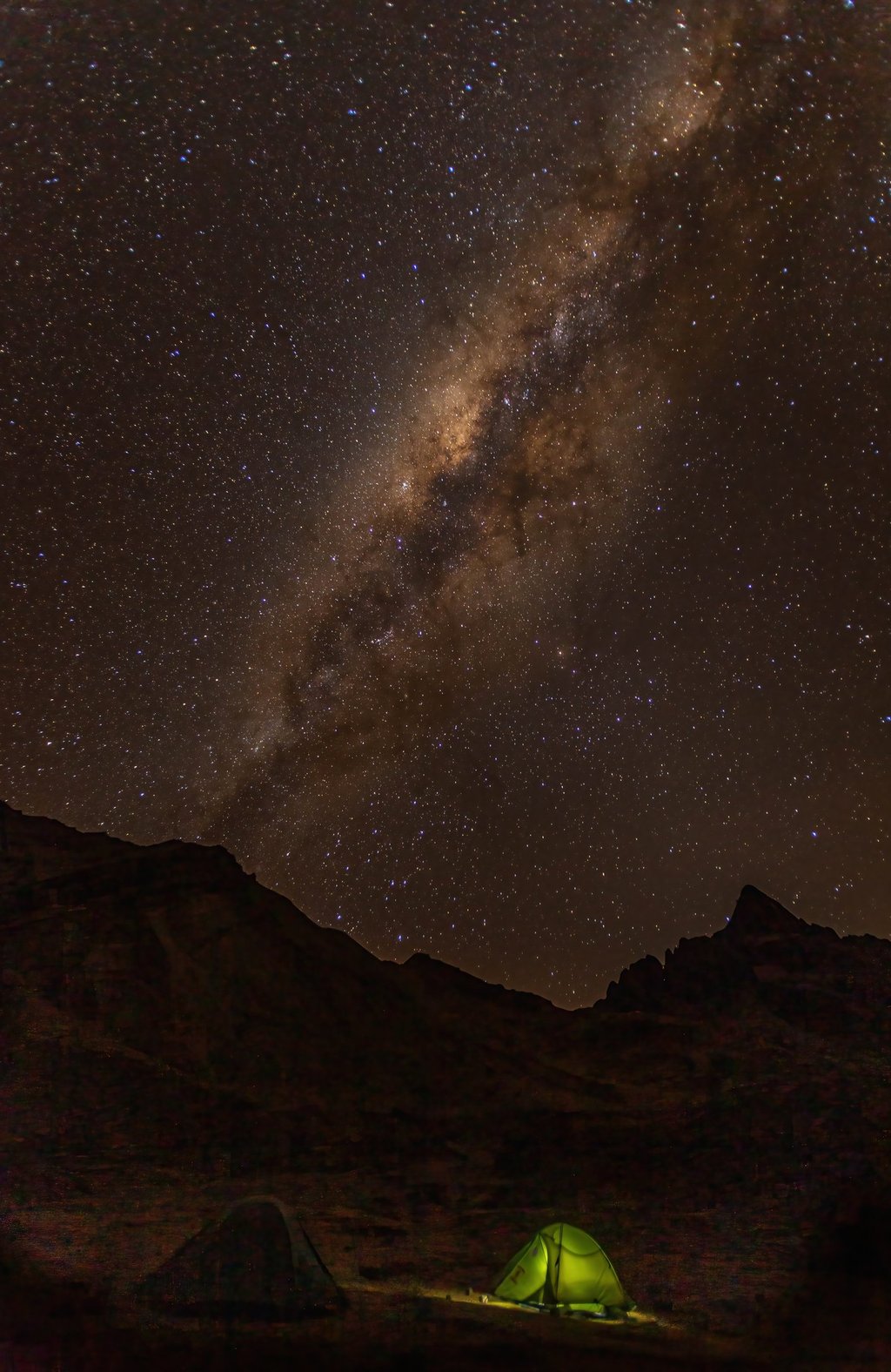
The Milky Way core above the Cordillera Vilcanota during its seasonal visibility window.
Star trails over mountain silhouettes and remote camps.
Wide-angle nightscapes incorporating alpine lakes and glacial peaks.
Blue-hour transitions that reveal landscape detail after a night session.
The strongest images often combine astronomical planning with careful foreground selection and patient observation of changing light.
Recommended Camera Settings for Zodiacal Light Photography
Use these settings as a starting point, not a fixed formula:
Lens: A fast wide-angle lens, often between 14 mm and 24 mm on a full-frame camera.
Aperture: Start around f/1.4–f/2.8, depending on your lens and desired depth of field.
Shutter speed: Test exposures of approximately 5–20 seconds, adjusting for focal length, tracking requirements, and star movement.
ISO: Begin around ISO 1600–6400 and refine according to sky brightness, aperture, and acceptable noise.
Focus: Focus manually on a bright star using magnified live view; recheck focus as temperatures change.
Tripod: Use a stable tripod and a remote release or timer to reduce camera movement.
Composition: Include a mountain ridge, lake, or other foreground element to establish scale and visual context.
The zodiacal light is faint, so avoid excessive foreground illumination and check the histogram and highlights. A test exposure is more reliable than relying on a universal camera setting.
Best Locations and Foregrounds Around Ausangate
The wider Ausangate region provides a range of potential landscape subjects, including:
Alpine lakes with mountain reflections when conditions permit.
Glacial peaks and ridgelines in the Cordillera Vilcanota.
High-Andean valleys and open horizons.
Naturally colored mountain formations around the Rainbow Mountain region.
Remote camps and landscape details that provide scale in night photography.
Final locations should be selected according to access, weather, safety, altitude, and the direction of the zodiacal light on the planned night.
Planning a High-Altitude Astrophotography Expedition
Ausangate is a demanding mountain environment. Many photography locations are above 4,000 meters, where altitude, cold, wind, and changing weather require careful preparation.
Allow time to acclimatize in Cusco or another appropriate location before traveling to high camps. Carry warm layers, gloves suitable for camera operation, spare batteries, adequate water, and reliable lighting.
Plan nighttime movement with a qualified local team and avoid unfamiliar terrain in darkness. If you experience symptoms of altitude illness, stop ascending and seek appropriate medical assistance.
A photography-focused itinerary should allow enough time for daytime landscape scouting, sunset photography, rest, and nighttime sessions without making every activity dependent on a single clear night.
Join an Ausangate Astrophotography Tour in 2027
Photo Tours Peru organizes photography-focused journeys in the Peruvian Andes for photographers interested in mountain landscapes, the Milky Way, star trails, and the zodiacal light.
Our Ausangate photography experiences can combine daytime landscape photography with night-sky sessions, depending on the itinerary, conditions, and available departure dates.
Contact Photo Tours Peru to discuss your 2027 travel dates, photography experience, preferred subjects, and equipment. We can help you identify a suitable itinerary and plan around the seasonal opportunities.
Plan Your Ausangate Photography Expedition
Explore our Ausangate Astrophotography Trek or contact Photo Tours Peru to discuss your photography goals.
Frequently Asked Questions
What is the best month to photograph the zodiacal light at Ausangate?
February to April can offer favorable evening opportunities, while August to October can provide favorable morning opportunities. The best dates depend on the ecliptic's orientation, moonlight, weather, and horizon visibility.
Is a new moon necessary for zodiacal light photography?
A dark sky is highly beneficial because the zodiacal light is faint. New moon periods can help, but moonrise and moonset times and the timing of twilight are equally important.
Can I photograph the Milky Way and zodiacal light on the same trip?
Yes. A multi-night expedition can provide opportunities for both subjects, but their ideal viewing windows may differ. Plan each session independently and allow for changing weather.
Do I need professional camera equipment?
A camera that supports manual exposure, a suitable wide-angle lens, and a stable tripod are a strong starting point. A fast lens can be helpful, but good planning and careful focusing are also essential.
Is Ausangate suitable for beginners in astrophotography?
Photographers with basic camera knowledge can learn night-sky techniques on a guided expedition. However, the high altitude and cold conditions require physical preparation, suitable equipment, and a realistic itinerary.
Does Photo Tours Peru offer private astrophotography tours?
Photo Tours Peru offers photography-focused itineraries and private-tour planning options. Contact the team to confirm the available 2027 departures, inclusions, and conditions for your preferred dates.
Contact
Email: phototourperu@gmail.com
Phone: +51 940188346
© 2025. All rights reserved.
Designed by Zihna