Peru Photography Trip Shopping List: Camera Gear and Travel Essentials
Packing for a photography trip to Peru starts with a simple question: what do you want to photograph? A hummingbird session calls for different equipment from a night beside an Andean lake. Portraits, festivals, mountain walks, and rainforest photography each place different demands on your bag.
Photo tours peru
11/18/20265 min read
Peru Photography Trip Shopping List: Camera Gear and Travel Essentials
Packing for a photography trip to Peru starts with a simple question: what do you want to photograph? A hummingbird session calls for different equipment from a night beside an Andean lake. Portraits, festivals, mountain walks, and rainforest photography each place different demands on your bag.
The most useful shopping list helps you fill real gaps in your equipment. You do not need to replace a camera you already know well or carry every lens you own. Start with your itinerary, the amount of walking, and the photographs you hope to make.
Your essential Peru photography checklist
Item What to check before buying Priority
Camera and main lens Familiar controls, reliable operation, and a manageable carrying weight Essential
Spare batteries and charger Compatibility and enough capacity for your longest interval without chargingEssential
Memory cardsCamera compatibility, dependable performance, and capacity for your shooting habits Essential
Camera rain cover and dry bags Protection that fits your actual camera and mounted lensEssential
Comfortable camera bagFit, access, and comfort when fully loaded Essential
Lens cloths and hand blowerClean tools appropriate for your equipment Essential
Image backup system A practical way to keep two copies of important photographs Strongly recommended Tripod and suitable head Stability with your heaviest planned setup Essential for planned nightscapes; situational otherwise HeadlampSimple controls and a low-output setting for shared night sessionsFor night photography BinocularsComfortable handling and useful viewing qualityUseful for bird photography
Bird photography: prioritize reach, handling, and protection
For a bird photography tour, choose a camera and telephoto combination you can use repeatedly without excessive fatigue. Autofocus familiarity and the ability to follow a moving subject matter as much as specifications.
A telephoto zoom offers flexibility when birds appear at different distances. As a planning example, approximately 300–600 mm full-frame-equivalent coverage can be useful for many bird subjects, but it is not a requirement or a guarantee of close photographs. Your sensor format, subject distance, light, and desired composition all matter. Nikon's bird photography guidance includes successful approaches using different camera types and telephoto equipment.
Add rain protection, spare cards, and a comfortable strap. A tripod or monopod can help with long sessions and heavier equipment, but it must suit the way you photograph. Test the combination before traveling rather than buying a heavy support system solely because it appears professional.
On the 12-day private Manu bird photography expedition, ask which sessions involve gardens, viewing areas, and walking trails before finalizing your kit.
Landscape photography: pack for variety without excess weight
A general-purpose zoom is a good starting point for landscapes. Add a wide-angle lens if broad foregrounds and expansive scenes are important to you. A lightweight telephoto can also help isolate distant peaks, mountain layers, and patterns.
Filters are optional tools. A polarizer may help manage reflections, while a neutral-density filter can support long exposures in brighter conditions. Buy them only if you understand how you intend to use them. Check filter sizes and compatibility before ordering.
For trekking trips, weigh the complete bag, including water, warm clothing, batteries, and support equipment. A useful exercise is to walk with the loaded bag near home. Remove items you are unlikely to use before adding more.
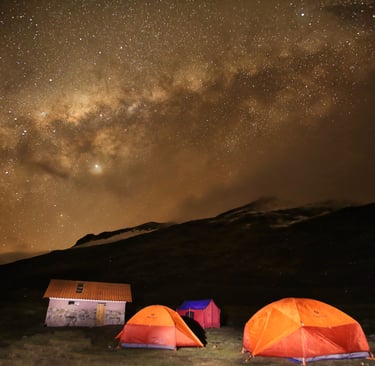
Explore the Ausangate astrophotography trek and discuss walking distances and camera-carrying arrangements with the team.
Astrophotography: stability comes first
For nightscape photography, a stable tripod and a camera that allows suitable exposure and focus control are the foundation. A wide-angle lens with a relatively large maximum aperture is helpful for gathering light, but an expensive new camera is not automatically necessary. Canon's astrophotography guidance emphasizes tripod support and aperture choice.
Consider adding:
A compatible remote release, or familiarity with the camera's timer.
A headlamp used considerately around other photographers.
Spare batteries kept accessible and protected from cold.
Gloves that allow you to operate the controls.
A warm layer appropriate to the confirmed camping conditions.
Practice focusing at night before the trip. Learn how to review focus and adjust exposure without relying on daylight autofocus. A star tracker is a specialist option, not a standard requirement for a first landscape-and-night-sky itinerary.
Portraits and festivals: keep the camera accessible
For cultural photography, a modest, responsive kit can be easier to use than a large collection of lenses. A standard zoom is versatile for environmental portraits and street scenes. A small prime lens can be useful in lower light, while a telephoto may help at performances where your position is restricted.
Carry spare batteries and cards where you can reach them without opening the whole bag. A second body is useful if you already own one and want to avoid repeated lens changes; it is not a purchase requirement.
Equipment never replaces permission. Ask before close portraits when appropriate, accept refusals, and follow local guidance about ceremonies and private spaces. Discuss flash use with your guide and the people involved rather than assuming it is welcome.
See the Q’eros portrait photography expedition for a journey centered on cultural storytelling.
Clothing and accessories worth prioritizing
Choose layers for your actual route rather than packing for “Peru” as one climate. Mountain camps, city walks, and humid forest trails require different clothing.
Bring broken-in footwear with suitable traction, rain protection, sun protection, and a refillable water bottle. Include a bag liner or dry bag for equipment that must stay dry. Weather-resistant camera construction does not make equipment waterproof.
Confirm sleeping equipment, baggage limits, charging opportunities, and any included support before shopping. Do not assume lodges or camps have the same power arrangements. Check your charger labels and the requirements of your itinerary before choosing adapters or charging accessories.
What to buy, rent, or leave at home
Decision Practical approach
Buy first Missing protection, compatible spare batteries, reliable cards, and a comfortable bag
Consider renting An expensive specialist lens you need for one trip, after checking availability and terms
Keep using A familiar camera that meets your photographic needs
Usually optional A drone, star tracker, full filter collection, or several overlapping lenses
Rental availability is not guaranteed. Confirm the supplier, dates, insurance terms, compatibility, and a realistic test period before depending on rented equipment. Ask about permissions before bringing drones or specialist lighting equipment to any location.
Protect your photographs with a simple backup routine
Plan storage around your camera's actual file sizes and expected shooting volume. At the end of each day, copy important files to a second independent storage location where practical. Keep the original cards until the copies are checked, and avoid storing every copy in the same bag.
A laptop and portable drive can work well, but the best system is the one you can use reliably with the power and time available. Confirm remote charging arrangements before relying on an elaborate nightly workflow.
Frequently asked questions
Do I need a professional camera for a Peru photography tour?
Choose equipment suited to your subjects and experience. A familiar camera can be an excellent starting point. Ask about your particular setup if your main goals are fast-moving birds or night skies.
Should I bring a tripod on every excursion?
Bring one for planned astrophotography and other sessions that require stable long exposures. For cultural sites and crowded events, confirm current equipment rules and available space before carrying it.
Is one lens enough?
It can be for a focused trip. Mixed bird, portrait, and nightscape objectives may call for different lenses. Prioritize your main interest and carrying comfort.
Can Photo Tours Peru help me choose what to pack?
Send the team your selected itinerary, camera model, lenses, and main photographic interests. Ask for trip-specific guidance before making major purchases.
Plan your photography equipment around your journey
Before buying anything, compare your existing kit with your itinerary. Identify the few items that will improve protection, comfort, reliability, or access to the photographs you want to create.
Contact Photo Tours Peru through the website with your travel dates and photography goals to discuss a suitable expedition and the equipment it requires.
References and editorial notes
Nikon, Fast Frames: A Quick Guide to Bird Photography: https://www.nikonusa.com/learn-and-explore/c/tips-and-techniques/fast-frames-a-quick-guide-to-bird-photography
Canon, The Basics of Astrophotography: https://www.canon.com.au/get-inspired/the-basics-of-shooting-astrophotography
Photo Tours Peru tour categories: https://phototoursperu.com/


Contact
Email: phototourperu@gmail.com
Phone: +51 940188346
© 2025. All rights reserved.
Designed by Zihna